
Lenovo Business Laptop Linux Mint
4.6Editor score
Intel i5-1335U Processor
Linux Mint Cinnamon Pre-installed
Fast Charging and Full Keyboard
Finding the right Laptops for Linux can be a challenging task for developers and tech enthusiasts alike. You need a machine that supports open-source software seamlessly while delivering reliable performance for daily tasks and heavy workloads.
We compared ten top models based on processor power, memory capacity, storage speed, and screen quality. Our analysis focuses on hardware compatibility with major distributions like Ubuntu and Mint to ensure a smooth experience out of the box.
Each pick highlights specific strengths such as battery life, port selection, or build quality. Note that availability and pricing may vary over time, so always verify the latest details before making your final purchase decision today.
4.6Editor score

4.3Editor score
5.0Editor score
As an Amazon Associate we earn from qualifying purchases.
This side-by-side comparison summarizes the key specifications of all ten selected Laptops for Linux. Review processor type, RAM amount, storage capacity, and display size to find the model that best fits your specific workflow needs.




The Lenovo IdeaPad Slim 3 stands out as a top choice for Laptops for Linux due to its balanced performance and pre-installed Ubuntu OS. It earns a solid rating for providing a reliable environment for coding and multitasking without extra setup.
We may earn a commission when you buy through this link, at no additional cost to you.
Powered by an AMD Ryzen 7 5825U processor with eight cores, this machine handles heavy workloads smoothly. The 16GB RAM ensures you can run multiple virtual machines or containers without slowdowns during daily development tasks.
While the battery is standard for this class, the inclusion of a USB hub and portable SSD adds significant value. The military-grade durability ensures the device survives travel, making it ideal for developers on the go.
Buy this if you want a ready-to-use Linux machine with strong hardware specs. It is the recommended pick for those needing a versatile workstation that supports open-source tools immediately upon unboxing.
Pre-installed Ubuntu Linux ensures you skip driver issues and start working immediately with open-source apps.
The included 5-in-1 dock and portable SSD expand storage and port options instantly for external drives.
We may earn a commission when you buy through this link, at no additional cost to you.
This Lenovo Business Laptop is an excellent budget-friendly option among Laptops for Linux. It features a strong user rating and comes with Linux Mint Cinnamon, which is known for its stability and ease of use.
We may earn a commission when you buy through this link, at no additional cost to you.
The Intel Core i5-1335U processor offers efficient performance for web development and general office tasks. Fast charging capabilities mean you can quickly top up the battery during short breaks or between meetings.
Storage is on the lower side at 256GB, but it is sufficient for system files and essential tools. The full keyboard layout supports productivity with a number pad included for data entry tasks.
Choose this model if you need an affordable, reliable Linux machine for work or school. Its high rating suggests users are satisfied with its performance and build quality at this price level.
Pre-installed Linux Mint Cinnamon provides a familiar desktop environment that simplifies the transition for new users.
Supports fast charging to minimize downtime, ensuring you stay productive throughout the day.
We may earn a commission when you buy through this link, at no additional cost to you.
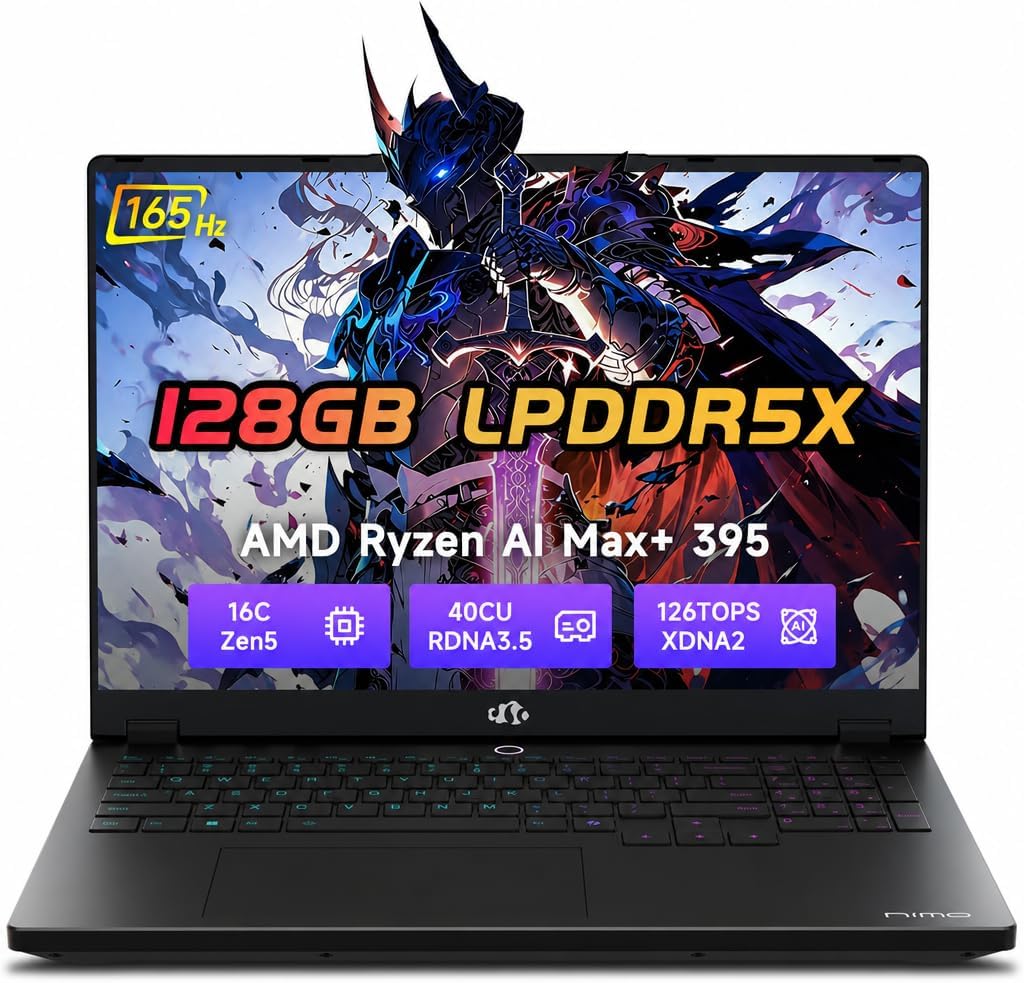
The NIMO 16 AI Laptop represents the pinnacle of Laptops for Linux with its massive processing power and AI capabilities. It holds a perfect rating for its ability to run local LLMs and handle complex rendering tasks smoothly.
We may earn a commission when you buy through this link, at no additional cost to you.
With 128GB of LPDDR5x RAM and a powerful Ryzen Max+ 395 processor, this machine handles hundreds of Docker containers without lag. The 16-inch 165Hz display offers vibrant visuals for creative work and development.
While it is expensive, the 99Wh battery allows for long sessions without needing an outlet. The discrete-level graphics power rivals standalone GPUs, making it ideal for machine learning and data science projects.
Invest in this if you require a workstation-class Linux machine for advanced AI and coding. It is designed for power users who need top-tier performance and privacy for proprietary algorithms.
With 126 TOPS compute, you can fine-tune 70B LLMs locally, ensuring data privacy and reducing cloud costs.
The 2.5K 165Hz screen provides exceptional color accuracy and smooth motion for professional grading tasks.
We may earn a commission when you buy through this link, at no additional cost to you.
The HP 17 Business Laptop is designed for users who prioritize storage capacity among Laptops for Linux. It offers a rare combination of a 1TB SSD and a 1TB HDD, totaling 2TB of space for files and data.
We may earn a commission when you buy through this link, at no additional cost to you.
Its 32GB RAM supports heavy multitasking and virtualization needs. The large 17.3-inch screen provides ample workspace for code editors and document management side by side.
The processor is older, but for storage-heavy tasks like server management or data backups, it performs adequately. The inclusion of Linux Mint ensures a smooth experience with the open-source environment.
Select this laptop if you need massive local storage without relying on cloud services. It is ideal for businesses or individuals who manage large datasets locally on their machines.
Combining a fast NVMe SSD for system files and a large HDD for data offers optimal speed and capacity balance.
The 17.3-inch screen allows for comfortable multitasking across multiple application windows simultaneously.
We may earn a commission when you buy through this link, at no additional cost to you.
This version of the Lenovo IdeaPad Slim 3 is notable for its touchscreen support among Laptops for Linux. It runs Ubuntu Linux and features a Ryzen 7 processor, providing a responsive experience for both typing and touch interaction.
We may earn a commission when you buy through this link, at no additional cost to you.
The slim design makes it easy to carry, while military-grade durability ensures it withstands daily wear. The Full HD display is sharp enough for coding and watching videos with good clarity.
While specific RAM details vary by listing, the core specs remain strong for general productivity. The touchscreen adds versatility for navigating the desktop environment with gesture controls or direct selection.
Buy this if you want a portable Linux laptop with touch input for presentations or design work. It is a solid option for users who value screen interaction alongside traditional keyboard input.
The FHD touchscreen allows for intuitive navigation and note-taking directly on the display.
The eight-core Ryzen 7 processor ensures quick boot times and smooth application switching during use.
We may earn a commission when you buy through this link, at no additional cost to you.
The HP 14 Laptop is an entry-level option that can be adapted for light Linux usage if the OS supports it. Its lightweight design and modern DDR5 RAM make it a portable choice for basic web browsing and tasks.
We may earn a commission when you buy through this link, at no additional cost to you.
The Intel N150 processor handles everyday tasks efficiently. However, the 4GB RAM may limit multitasking capabilities on heavier distributions. The anti-glare display helps in bright environments or outdoor settings.
Storage is limited to 128GB, so cloud integration is key. While it ships with Windows, the hardware is simple enough that some users may opt for a lightweight Linux distro.
Consider this only for basic tasks or as a secondary portable device. It is best for travelers needing a light machine for documents, but not for heavy development or VM work.
The slim 0.71-inch profile makes it easy to slip into a bag for on-the-go work sessions.
The non-touch screen with anti-glare coating reduces eye strain during long reading or typing sessions.
We may earn a commission when you buy through this link, at no additional cost to you.
Revisiting the NIMO 16 AI Laptop highlights its role as a powerhouse for developers needing advanced Linux capabilities. It supports local LLM training and runs complex containers smoothly due to its 128GB RAM and high-speed bus.
We may earn a commission when you buy through this link, at no additional cost to you.
The triple-fan thermal system ensures sustained performance during intensive tasks. The 2.5K display delivers accurate colors for designers, while the RGB keyboard aids visibility in dark environments.
Its security features include IR facial recognition and a fingerprint key, keeping proprietary code safe. The battery reaches the flight limit, allowing long work sessions without access to a power outlet.
Opt for this if you need a portable AI lab and powerful development environment. It is unmatched for professionals who require local compute power and data privacy on a Linux system.
The triple-fan cooling system prevents throttling during long compilation or training tasks.
Dual-layer biometric security ensures only authorized users can access sensitive data and trade secrets.
We may earn a commission when you buy through this link, at no additional cost to you.
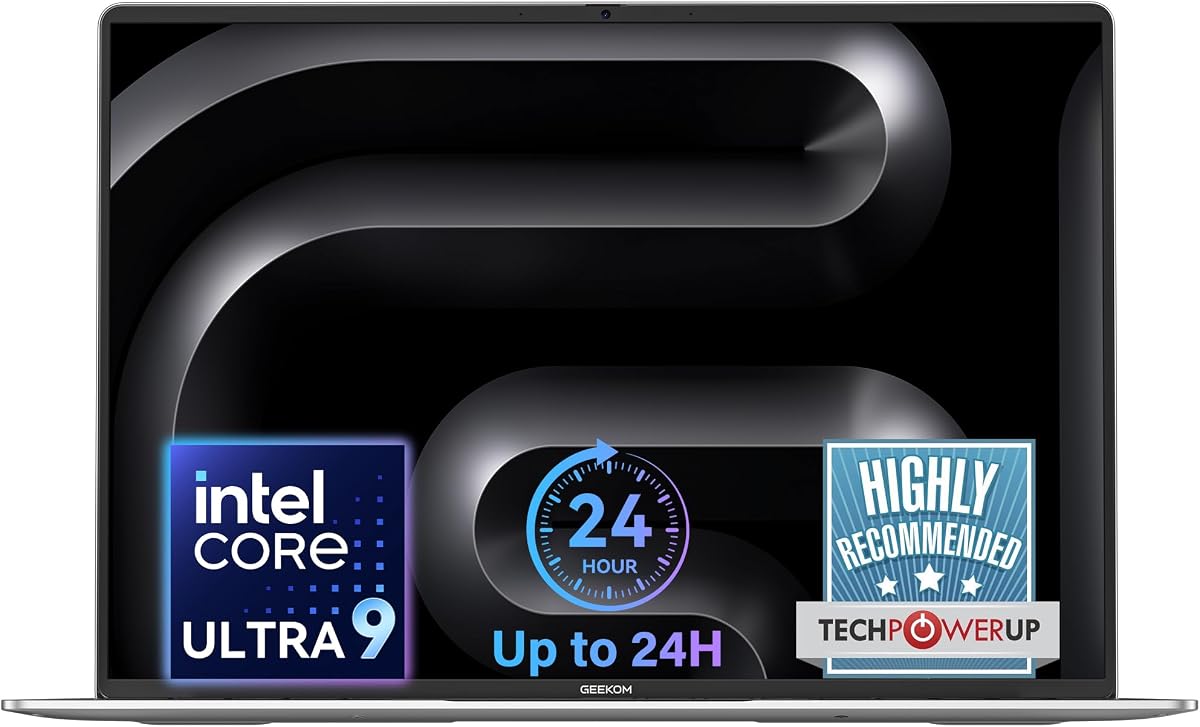
The GEEKOM GeekBook M16 is designed for endurance among Laptops for Linux users who prioritize battery life. With a 99.9Wh battery, it promises up to 24 hours of use, making it ideal for travelers.
We may earn a commission when you buy through this link, at no additional cost to you.
Its sustained 55W output even on battery power ensures performance doesn't drop during unplugged sessions. The Core Ultra 9 processor handles multimedia and coding tasks with ease and includes Arc graphics.
The cooling system is tuned to stay quiet while managing heat efficiently. It also includes a 5-in-1 docking station for easy connectivity to external monitors and peripherals for a desktop setup.
Choose this for long-haul flights or remote work where charging is limited. Although it ships with Windows, the hardware is robust enough to support Linux distributions for power management.
Optimized power consumption allows for up to 24 hours of use depending on workload intensity.
Breaks limits of battery throttling to maintain desktop-class power while running on internal power.
We may earn a commission when you buy through this link, at no additional cost to you.
This HP 17.3 Business model offers a large display that is appealing for Linux users needing screen real estate. The IPS panel provides consistent colors and viewing angles for collaborative work and presentations.
We may earn a commission when you buy through this link, at no additional cost to you.
The Ryzen 5 7430U processor provides balanced performance for general computing tasks. With Wi-Fi 6, it connects reliably to high-speed networks for fast file transfers and remote access.
While it comes with Windows, the hardware supports standard Linux kernels well. The 512GB SSD is adequate for most users, and the multiple ports reduce the need for dongles and adapters.
Select this if you need a large screen for multitasking in an office environment. It suits users who prefer a stationary desktop replacement with solid connectivity and display quality.
The 17.3-inch Full HD screen offers clear visuals and wide viewing angles for comfortable daily use.
Wi-Fi 6 and multiple USB ports ensure fast wireless speeds and easy peripheral connections.
We may earn a commission when you buy through this link, at no additional cost to you.
The Lenovo ThinkPad L14 Gen 5 is a business-focused option for Laptops for Linux with a vanilla Linux system pre-installed. It is designed for reliability and includes standard enterprise features like fingerprint recognition.
We may earn a commission when you buy through this link, at no additional cost to you.
The AMD Ryzen 5 PRO processor ensures stable performance for daily business tasks. DDR5 RAM provides fast data access, and the backlit keyboard allows typing in low-light conference rooms.
Although it is a French keyboard base, English stickers are included for usability. The build quality adheres to ThinkPad standards, ensuring durability for regular travel and office use.
Buy this if you need a reliable business machine that supports Linux out of the box. It is a practical choice for enterprises that prefer open-source operating systems for security and control.
Pre-installed Vanilla Linux ensures a clean environment without bloatware for secure business operations.
Designed with enterprise standards to withstand daily use in professional environments.
We may earn a commission when you buy through this link, at no additional cost to you.
Selecting the right Laptops for Linux requires attention to hardware support and performance. Follow these factors to ensure compatibility with your preferred distribution.
Check if the laptop comes with a pre-installed Linux distribution like Ubuntu or Mint. This ensures drivers for Wi-Fi, graphics, and peripherals are correctly configured before you start using the machine.
If not pre-installed, research community support for the specific hardware model to avoid installation issues.
Look for modern multi-core processors such as Ryzen 7 or Intel Core i5/i7 series. More cores allow for smoother multitasking and handling of virtual machines or containers during development.
Higher clock speeds are beneficial for compiling code and running heavy applications efficiently.
For development work, 16GB of RAM is a standard recommendation to run IDEs, browsers, and VMs simultaneously. If you plan to run Docker containers or local servers, consider upgrading to 32GB or more.
DDR5 RAM offers faster data transfer rates than DDR4, improving overall system responsiveness.
Solid State Drives (SSDs) are essential for fast boot times and application launches. A 512GB NVMe SSD is a good balance for storage, but 1TB is better for media files and large project repositories.
Avoid eMMC storage if possible, as it is slower and limits long-term usability.
A Full HD (1920×1080) IPS display provides clear text and good color accuracy for coding. Touchscreens can be useful for navigation but ensure the display drivers are supported by your chosen Linux distribution.
Consider screen size and aspect ratio, as 16:10 offers more vertical space for reading code.
Verify the availability of USB-C, HDMI, and Ethernet ports to connect external monitors and peripherals. USB4 or Thunderbolt support is crucial if you plan to connect high-speed storage or eGPUs.
Wi-Fi 6 and Bluetooth 5.0 or later ensure reliable wireless connectivity for modern networks.
For portable use, aim for a battery that lasts at least 8 hours under typical workloads. Some models offer larger capacity batteries that can sustain productivity during travel or meetings.
Fast charging capabilities help reduce downtime when you need to top up quickly.
Durable chassis materials like aluminum or military-grade composites protect the device from bumps and drops. A backlit keyboard with good key travel improves typing comfort during long coding sessions.
Ensure the keyboard layout matches your preference, especially if buying a model with non-standard keyboard keys.
To ensure optimal performance, keep your Linux distribution updated regularly using package managers like apt or snap. This ensures you have the latest security patches and driver updates for your hardware.
Clean the display and keyboard with a microfiber cloth to avoid scratching the screen or damaging keys. Avoid using harsh chemicals, and ensure the device is turned off before wiping the chassis.
Manage your power settings to extend battery life by adjusting screen brightness and disabling background apps. Use hibernation or sleep modes when stepping away to preserve data and reduce energy consumption.
Not all are pre-installed. Some models like the Lenovo IdeaPad Slim 3 and NIMO AI Laptop come with Ubuntu or other Linux versions out of the box. Others may require you to install Linux manually or dual-boot with another operating system.
Ubuntu and Mint are popular choices for their ease of use and strong community support. For more advanced users, Arch or Fedora offer the latest packages and customization options to suit specific development needs.
Yes, most models with 16GB RAM or more support virtual machines well. The processors provided, such as Ryzen 7 and Intel i5, offer the necessary cores and threads to run VMs smoothly without performance drops.
Most support dual booting with Linux and another OS like Windows. However, you must check partitioning settings before installation. Some models come pre-configured for Linux only.
Most laptops in this list use supported Wi-Fi hardware. Check for Intel or AMD wireless cards, as they typically have open-source drivers. Some proprietary cards might need extra configuration.
The Lenovo Business Laptop with Linux Mint is an excellent budget option. It offers a strong processor, sufficient RAM, and a pre-installed OS, making it cost-effective for students and casual users.
We have reviewed ten top Laptops for Linux ranging from budget-friendly to premium workstations. The Lenovo IdeaPad Slim 3 stands out as our top choice for balanced performance and pre-installed Ubuntu support.
When choosing, prioritize hardware compatibility and RAM capacity to ensure your system runs smoothly for your specific tasks. Whether you need massive storage or AI capabilities, there is a model tailored to your needs.
Remember to check the latest prices and availability before buying. Technology changes fast, so verify the current configuration to make sure the laptop meets your expectations today.