
Power Queen Battery Balancer 48V
4.3Editor score
Four connection ports for flexibility
Auto standby mode saves power
Compatible with LiFePO4 and Lead Acid
This guide compares the top 12V 24V 48V Battery Equilizer Balancer models for RVs, solar, and off-grid systems to help you choose the right one.
Keeping your battery bank healthy requires more than just a good charger. You need a reliable equalizer to ensure every cell stays balanced during use. This guide explores the best 12V 24V 48V Battery Equilizer Balancer options available for serious off-grid applications.
We evaluated ten leading models based on voltage range, protection features, and compatibility with different chemistries. Our comparison covers active and passive balancing methods to help you understand which technology fits your specific bank configuration and usage patterns.
Each pick highlights key strengths like LED displays, safety protections, and ease of installation. While we do not list prices here, remember that costs vary by retailer. Always verify current availability before making your final purchase decision for your power system.
4.3Editor score

4.3Editor score

4.1Editor score
The following table offers a quick side-by-side look at the technical specifications and primary strengths of each model we reviewed. Use this to compare voltage capabilities and protection features at a glance before diving into the detailed reviews below.




This LiTime model stands out for its ability to handle complex battery bank configurations up to 48V. It is rated highly by users who need a robust solution for RVs and off-grid systems.
We may earn a commission when you buy through this link, at no additional cost to you.
The device features active balancing that kicks in when voltage differences exceed 10mV. It also includes critical safety protections like reverse polarity safeguards to prevent wiring errors from damaging your setup.
While it is designed for 48V, it is also compatible with 24V and 36V setups. The only limitation is that it requires a specific parallel-then-series wiring configuration to function correctly on higher voltage banks.
If you are building a large battery system and want reliable long-term balance, this is a top-tier choice. It simplifies maintenance and helps you get the most life out of your investment.
It actively manages voltage differences to keep all cells charged evenly over time.
Built-in protections prevent overheating and wiring mistakes from causing damage.
We may earn a commission when you buy through this link, at no additional cost to you.
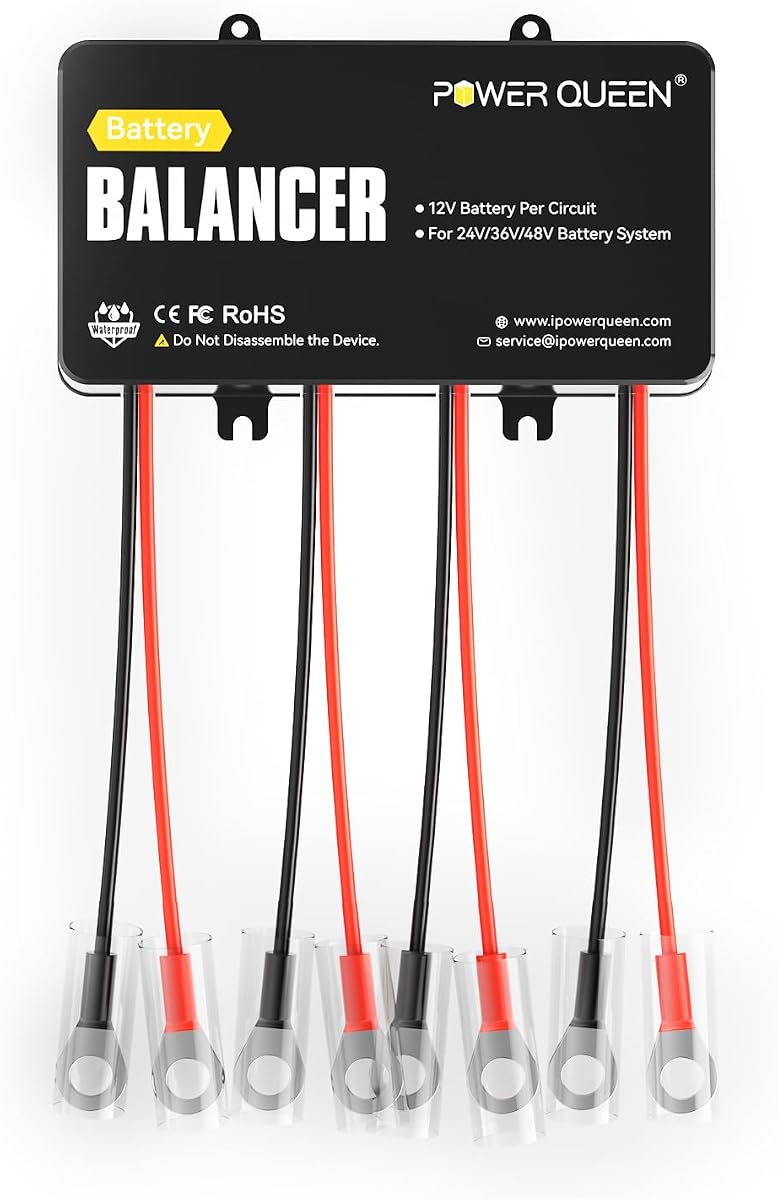
The Power Queen balancer offers an excellent balance of features and cost for hobbyists and budget-conscious buyers. It supports a wide range of battery chemistries including LiFePO4 and Lead Acid.
We may earn a commission when you buy through this link, at no additional cost to you.
It automatically activates when voltage differences are detected and switches to standby when balanced. This smart behavior saves energy while ensuring your bank stays healthy without constant manual intervention.
The main downside is that it shares many features with other models in its class. You might find it harder to distinguish this specific unit from competitors without checking specific connection requirements.
For most standard 24V to 48V banks, this provides everything you need at a competitive price. It is a safe and reliable choice for maintaining battery health.
It draws minimal power when balanced to avoid draining your battery bank.
Works seamlessly with Lithium, Gel, and Flooded Lead Acid batteries.
We may earn a commission when you buy through this link, at no additional cost to you.
If you want to see exactly what is happening inside your battery bank, the MAZAVA HX02 is the standout choice. Its LCD display provides clear visual feedback on voltage and status.
We may earn a commission when you buy through this link, at no additional cost to you.
The aluminum alloy shell helps dissipate heat effectively, which is crucial for long-term reliability. It also supports multi-module parallel setups allowing you to scale for even higher voltage banks.
The higher cost reflects the premium build quality and display features. It might be more than you need if you do not require visual feedback or advanced scaling capabilities.
For users who value transparency and robust construction, this model is worth the investment. It gives you peace of mind by letting you verify balance status at a glance.
The LCD screen helps you confirm voltage balance instantly without extra tools.
Metal casing ensures heat dissipates properly during active balancing cycles.
We may earn a commission when you buy through this link, at no additional cost to you.
Victron Energy is a well-respected name in marine and off-grid power systems. Their balancer offers a straightforward solution for two-series 12V setups or multiple parallel strings.
We may earn a commission when you buy through this link, at no additional cost to you.
It activates when the system voltage rises above 27V ensuring it only works during charging cycles. This smart logic prevents unnecessary drain and ensures the device runs when needed.
The main trade-off is its lower 1A current capacity compared to newer active balancers. This means it may take longer to balance batteries that have drifted significantly apart in charge.
If you already use Victron components in your system, this adds compatibility and trust. It is a solid choice for marine applications where reliability is paramount.
It only operates when voltage is high ensuring no drain during use.
Victron is a proven brand in marine and solar power communities.
We may earn a commission when you buy through this link, at no additional cost to you.
This model stands out for its ability to handle systems up to 96V. It also supports rare chemistries like Nickel Cadmium which other balancers often miss.
We may earn a commission when you buy through this link, at no additional cost to you.
The rail-type buckle installation makes it easy to mount in a distribution box. This saves time and effort compared to standard screw mount options found on other units.
While highly versatile, the lack of detailed documentation can make installation slightly tricky. Ensure you understand your battery configuration before connecting to avoid errors.
For specialized high voltage systems, this offers a practical and flexible solution. It brings balance to complex setups that are often hard to manage.
Mounting rails make installation fast and organized in any box.
Supports unique battery types like Nickel Cadmium not found elsewhere.
We may earn a commission when you buy through this link, at no additional cost to you.
This balancer includes a basic LED display to show you if it is active. It supports 4 x 12V setups and offers low voltage disconnect to protect your batteries.
We may earn a commission when you buy through this link, at no additional cost to you.
It is designed primarily for 48V single units but can be combined for higher voltages. The LED indicator is simple but provides a useful visual confirmation of operation.
The low voltage disconnect is a great feature to prevent deep discharge issues. However, the display is very basic and does not show exact voltage numbers.
For users who want a cheap visual cue without complex displays, this works well. It balances basic safety with cost effectiveness for standard 48V banks.
Protects batteries by disconnecting when voltage drops too low.
LED lights provide a quick check on whether balancing is active.
We may earn a commission when you buy through this link, at no additional cost to you.
If you have a 24V system, this Redodo unit is an excellent choice. It delivers 10A of current for fast balancing and includes clear LED indicators.
We may earn a commission when you buy through this link, at no additional cost to you.
It comes with M8 OT terminals which simplifies installation significantly. The high temperature protection ensures it stays safe during long balancing cycles.
The main limitation is that it is designed specifically for 24V setups. If you expand to 48V later, you will need to purchase a different unit or combine multiple devices.
For 24V users, the strong current and included terminals make it a premium experience. It offers excellent value and ease of use for smaller systems.
High current output helps balance batteries quickly after heavy discharge.
Pre-included terminals save you time and money on extra parts.
We may earn a commission when you buy through this link, at no additional cost to you.
This model shares many features with the earlier Power Queen but is rated slightly lower. It supports 24V to 48V and switches to standby when balanced.
We may earn a commission when you buy through this link, at no additional cost to you.
It includes reverse polarity protection to prevent wiring errors and high temperature protection to avoid overheating. These safety features make it a safe choice for beginners.
The build quality is standard for the price range. While reliable, it does not offer the advanced monitoring or heavy-duty construction of higher-end options.
For standard applications where budget matters most, this delivers reliable service. It ensures your bank stays balanced without requiring constant attention.
Built-in protection prevents common wiring mistakes from causing damage.
Standby mode ensures it does not drain your battery when not needed.
We may earn a commission when you buy through this link, at no additional cost to you.
This unit is compact and supports a wide range of chemistries. It provides 5A compensation current and includes smart indicator lights for status monitoring.
We may earn a commission when you buy through this link, at no additional cost to you.
The low-voltage cutoff protects your batteries from deep discharge. This ensures that your bank stays safe even if there is a power outage or usage issue.
The 5A current is lower than others in this list which means slower balancing. However for small banks this is often sufficient and cost effective.
For users needing a basic and reliable solution for smaller banks, this fits well. It covers the essential safety and balancing needs without extra cost.
Small footprint makes it easy to fit in tight spaces.
Low voltage cutoff prevents dangerous deep discharge scenarios.
We may earn a commission when you buy through this link, at no additional cost to you.
This model features a digital LED display to help you monitor voltage easily. It uses high precision chips to reduce voltage deviation and maintain balance.
We may earn a commission when you buy through this link, at no additional cost to you.
The flame retardant shell adds an extra layer of safety for your setup. It supports N x 12V systems making it versatile for different bank sizes.
Balancing speed is moderate which is typical for 5A units. You may need more time to balance batteries after heavy use compared to 10A models.
For those who want a digital readout without paying premium prices, this is a good choice. It balances basic features and cost effectively for most users.
Flame retardant casing adds safety to your installation.
Digital display makes checking voltage easier than standard LEDs.
We may earn a commission when you buy through this link, at no additional cost to you.
Choosing the right balancer requires understanding your battery bank configuration and chemistry. The following factors will help you narrow down the best options for your needs.
Ensure the balancer supports your total system voltage. Some units work only for 24V while others support up to 48V or 96V.
Check if the unit is designed for 4 x 12V or 2 x 24V to avoid wiring issues.
Different battery types require different balancing logic. Ensure the unit supports your specific type like LiFePO4 or Flooded Lead Acid.
Some balancers cannot handle Lithium ions which can lead to poor performance or damage.
Higher current allows faster balancing when batteries are significantly out of sync. Units range from 5A to 10A or more.
If you frequently discharge deeply, look for a higher current unit to maintain balance quickly.
Look for reverse polarity protection to prevent damage from wiring errors. High temperature protection is also crucial for safety.
Low voltage cutoff ensures the balancer does not drain your battery when not needed.
Units with LED or LCD displays provide visual feedback on voltage status. This helps you troubleshoot issues quickly.
Some users prefer simple models without displays to save cost and reduce failure points.
Consider how you will mount the unit. Rail-type buckles are easier than screws for some users.
Check if terminals are included so you do not need to buy them separately.
An auto standby mode ensures the unit does not drain your battery when not balancing. This is key for off-grid setups.
Look for units that draw minimal current like 5mA when balanced to preserve energy.
Check the warranty period offered by the manufacturer. A 1-year warranty is standard for most units.
Reliable customer support can help with installation issues or replacements if needed.
Always connect the balancer in parallel to your battery bank or between series strings as instructed. Ensure polarity matches exactly to prevent reverse connection damage.
After connecting, monitor the device for any unusual heat or indicator behavior. Most units should only activate when there is a voltage difference between batteries.
Regularly inspect the terminals and casing for signs of corrosion or wear. Clean any dust from vents to ensure heat dissipation remains effective over time.
A battery balancer ensures that all cells in a series bank charge and discharge evenly. This prevents weak cells from dragging down the whole bank and extends the overall life of the batteries.
Yes but you need a specific balancer compatible with lithium chemistry. Standard lead acid balancers may not work correctly with LiFePO4 and could cause issues.
Standby mode activates when the voltage difference is low so the unit stops drawing current. This preserves your battery energy while keeping the device connected permanently.
Yes many units allow you to connect multiple balancers in parallel to handle 48V or 96V systems. Always check the manual to ensure you connect them correctly.
No a balancer complements a BMS but does not replace it. It helps balance cells after charging but a BMS provides active safety protection during use.
Higher price often reflects better build quality or extra features like LCD displays. Some models include better safety protections or higher current capacity which adds cost.
The LiTime and Power Queen models stand out for their balance of price and features. The MAZAVA unit is ideal for those who need detailed monitoring displays.
Prioritize protection features and chemistry compatibility when making your choice. A balancer is an investment that pays off by extending your battery bank life.
Prices and stock change frequently so check the latest details before ordering. Always verify your wiring setup to ensure the device works as expected.