
ST to LCU Fiber Optic Adapter
5.0Editor score
Precision ceramic sleeves for stable signal transmission
Robust metal housing ensures corrosion resistance
Tool-free installation with push-pull LC side
This guide compares the top rated LC to ST fiber optic adapters for singlemode and multimode networks ensuring low loss and reliable signal conversion for
Finding the right LC to ST fiber optic adapter is essential for maintaining signal integrity across mixed network environments. These adapters bridge the gap between legacy ST connectors and modern LC interfaces ensuring seamless connectivity for telecommunications and data center applications. A high quality adapter minimizes insertion loss and protects sensitive optical signals from degradation during transmission.
We evaluated ten top rated products based on performance specifications durability and compatibility with standard fiber types. Each entry was selected for its ability to handle specific wavelengths and support both simplex and duplex configurations effectively. Our analysis focuses on real world reliability and the technical details that matter most to network engineers and technicians.
Each pick highlights key features pros and cons to help you match the adapter to your specific infrastructure needs. Note that product availability and pricing may fluctuate over time so verify current details before purchasing. This guide serves as a trusted resource for upgrading legacy systems without compromising performance or reliability.
5.0Editor score

4.8Editor score

5.0Editor score
The following table provides a side-by-side comparison of all ten products analyzed in this guide. It highlights core specifications such as connector types mode support and wavelength compatibility to help you quickly identify the right fit for your network setup.
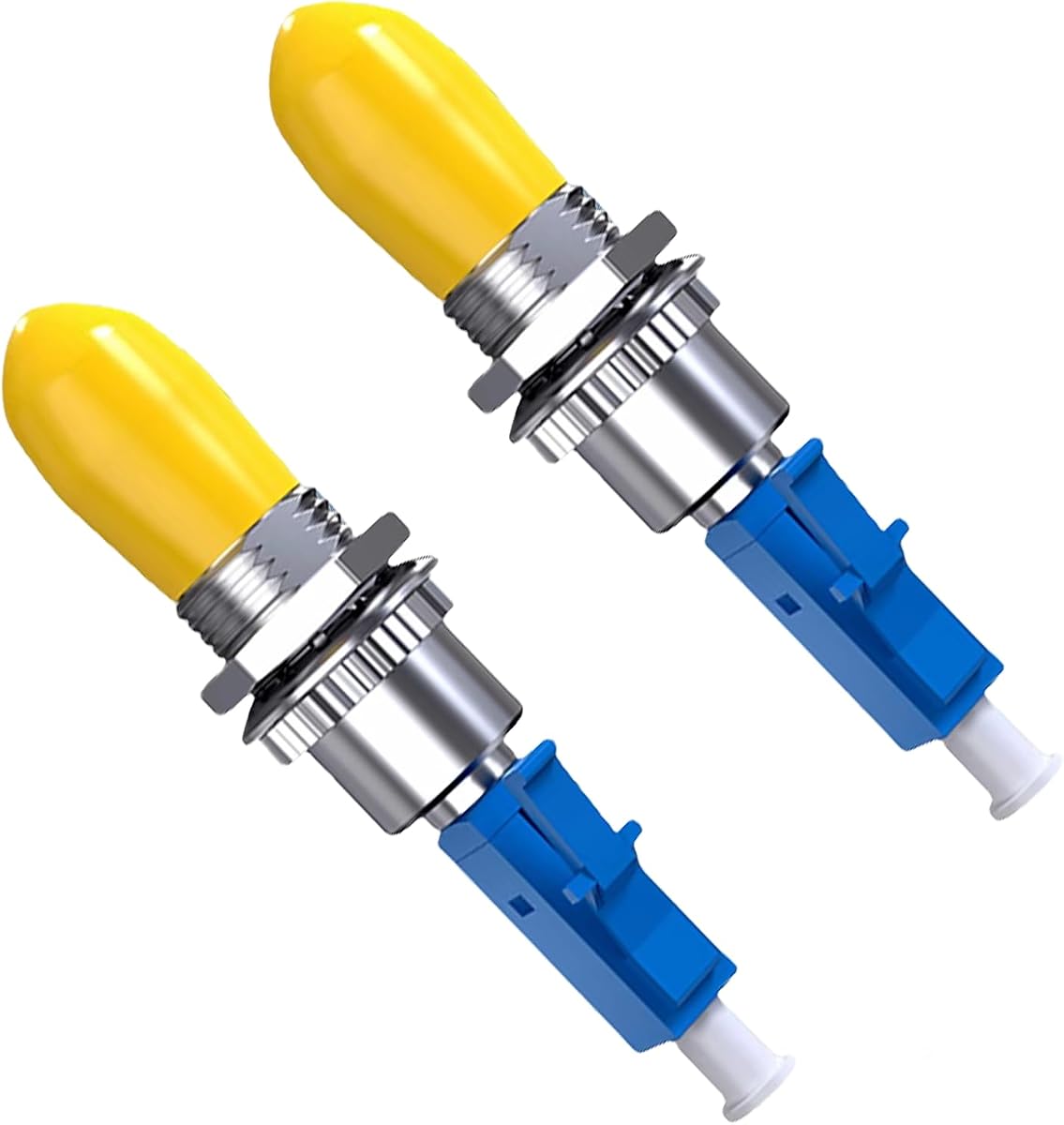


This adapter is a top performer for single mode fiber networks converting ST/UPC male to LC/UPC female connections. It boasts a 4.8 star rating from users who appreciate its reliability in demanding environments. The hybrid optical fiber adapter maintains signal integrity across standard wavelengths ensuring stable performance.
We may earn a commission when you buy through this link, at no additional cost to you.
Its standout quality is the low insertion loss capped at 0.2dB which preserves signal strength over distance. The ceramic and metal sleeve material resists wear while supporting over 1000 plug insertions. This durability makes it ideal for frequently accessed ports in enterprise or telecom infrastructure.
A minor trade-off is that the package includes three units rather than a single adapter which may be unnecessary for small setups. However the additional units often prove useful for testing redundancy or backup scenarios. The price point reflects the quality materials and precise engineering.
Network technicians and engineers should buy this adapter for upgrading legacy ST cabling to modern LC systems. It delivers the performance needed for optical power meter checks and routine maintenance. For anyone seeking a balanced blend of cost and quality this adapter is the strongest choice.
The design ensures minimal attenuation at 1310nm and 1550nm wavelengths which is critical for long haul single mode links.
Flame retardant and high impact resistant materials guarantee safe operation even in industrial or high temperature settings.
We may earn a commission when you buy through this link, at no additional cost to you.
This adapter offers a compelling solution for integrating legacy equipment with modern systems without breaking the budget. It holds a perfect 5.0 star rating reflecting high satisfaction among users who prioritize reliability. The adapter enables conversion between classic ST and modern LC connectors in single mode fiber networks.
We may earn a commission when you buy through this link, at no additional cost to you.
The precision ceramic sleeves and robust metal housing ensure low insertion loss and stable signal transmission. Threaded ST coupling provides secure connections that resist vibration which is valuable in active network environments. Its compact design fits standard adapter panels helping optimize space in high density patch setups.
While it lacks advanced APC polish options the UPC contacts are sufficient for most enterprise and telecom applications. The push pull LC side allows tool free installation saving time during field maintenance. This simplicity reduces downtime and makes it accessible for technicians of varying experience levels.
Network administrators upgrading mixed infrastructure should buy this adapter for its proven interoperability and cost efficiency. It bridges legacy and modern fiber systems effectively maintaining excellent signal integrity. For budget constrained projects needing reliable performance this adapter is the clear value pick.
Seamless compatibility with all standard ST/UPC and LC/UPC connectors simplifies migration from older network architectures.
Its small footprint ensures it fits comfortably in crowded wall outlets and high density patch panels without obstruction.
We may earn a commission when you buy through this link, at no additional cost to you.
This kit provides a comprehensive one stop solution for diverse fiber optic testing and connection needs. It includes six interchangeable connectors covering LC SC ST and FC types ensuring compatibility across major connector standards. The perfect 5.0 star rating highlights its dependability for professional daily use.
We may earn a commission when you buy through this link, at no additional cost to you.
Durable metal housings with precision manufacturing deliver minimal insertion loss and maximum return loss for accurate measurements. The plug and play design requires no tools which minimizes downtime during field installation and maintenance. This makes it ideal for technicians managing complex OTDR connections and network troubleshooting.
The primary trade-off is the higher cost relative to basic adapters but the versatility justifies the investment. It supports both single mode and multimode fibers expanding its utility across different network types. The reliability and range of adapters reduce the need for separate purchases later.
Field engineers and data center professionals should buy this kit for its unmatched flexibility and robust construction. It streamlines testing workflows and ensures seamless transitions between varied connector types. For those needing a premium all-inclusive option this kit is the top tier choice.
Supporting LC SC ST and FC connectors enables seamless transitions across virtually any fiber optic infrastructure standard.
Insertion loss under 0.2DB and return loss over 45DB ensure precise signal accuracy for critical testing tasks.
We may earn a commission when you buy through this link, at no additional cost to you.
This adapter focuses on connecting LC fiber patch cables to ST fiber patch cables for efficient network maintenance. It shares the high performance characteristics of its 3 pack sibling with a perfect 5.0 star rating. The hybrid optical fiber adapter supports standard single mode wavelengths and operates reliably across temperature ranges.
We may earn a commission when you buy through this link, at no additional cost to you.
Key strengths include its low loss design and resistance to high temperatures and impact. The adapter helps check continuity of fiber patch cables with visual fault locators which is vital for network diagnostics. Its compact and lightweight nature simplifies handling during installation tasks.
While the package size is smaller than the 3 pack version the performance remains consistent. Some users may prefer buying in larger quantities to reduce shipping costs but the individual quality is robust. The price reflects the high grade materials used in construction.
Technicians working with optical power meters should buy this adapter for precise testing and signal verification. It ensures stable connections for visual fault locator checks and routine maintenance. For those needing LC to ST conversion with proven reliability this adapter is a solid option.
Compatible with telecommunications CATV engineering and optic network maintenance making it versatile for diverse projects.
Meets transmission requirements for 1310nm and 1550nm bands to ensure uninterrupted data flow.
We may earn a commission when you buy through this link, at no additional cost to you.
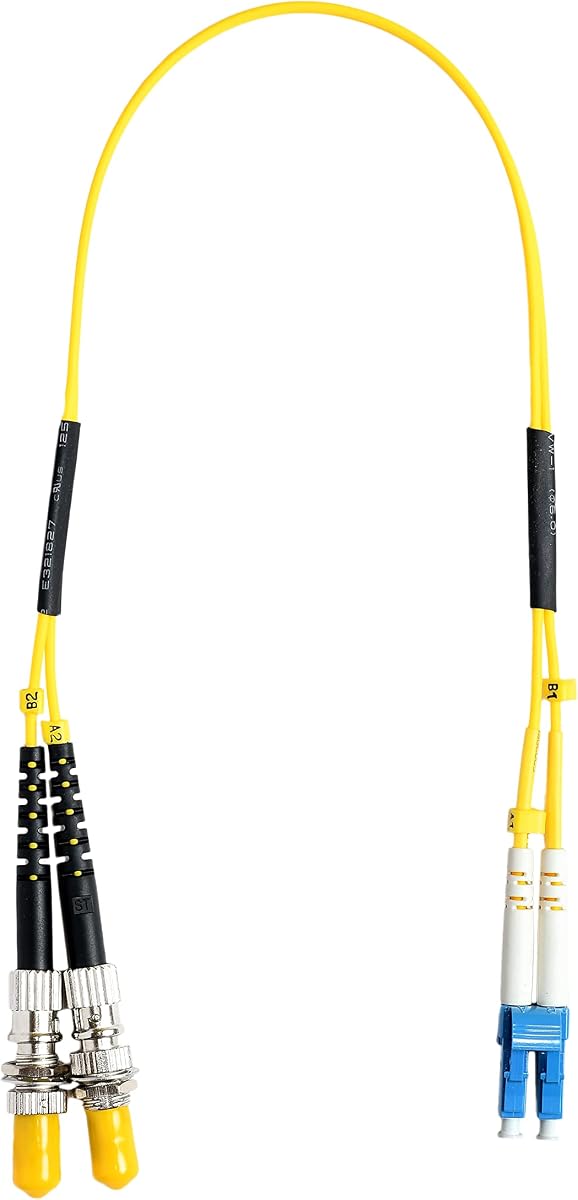
This product is a pre assembled LC to ST adapter cable designed for quick and reliable connectivity. It features singlemode 9/125um duplex fiber with LC male to ST female connectors for direct integration. The cable is factory terminated and tested for link loss and return loss ensuring consistent performance.
We may earn a commission when you buy through this link, at no additional cost to you.
The tight buffered duplex zip cord uses LSZH jacketing which reduces smoke and halogen emissions during fire incidents. Its 1FT length makes it perfect for short distance connections between patch panels and devices. This eliminates the need for separate adapters and cables in compact setups.
The fixed length may be a limitation if longer runs are required but it reduces cable clutter significantly. The 2.0mm outer diameter ensures flexibility while maintaining structural integrity. It is a practical choice for controlled environments where cable management is critical.
Network designers needing short patch solutions should buy this cable for its safety features and pre tested quality. It simplifies installation by removing adapter alignment steps. For clean and safe fiber connectivity in tight spaces this adapter cable is highly recommended.
Low smoke zero halogen jacketing minimizes hazardous emissions which is crucial for indoor and confined space installations.
Every unit undergoes 100% testing for link loss and return loss to guarantee optimal performance out of the box.
We may earn a commission when you buy through this link, at no additional cost to you.
This adapter cable serves multimode networks using 62.5/125 micron fiber with LC male to ST female connectors. It is optimized for 850 nm wavelength applications common in legacy data centers and LAN setups. The 4.8 star rating indicates user satisfaction with its connectivity and build quality.
We may earn a commission when you buy through this link, at no additional cost to you.
The standard zip cord duplex jacketing provides basic durability for indoor use without bulk. Its 1FT length reduces tangling and saves space in high density racks. This fixed length design ensures consistent signal paths without slack management issues.
A limitation is its restriction to multimode 62.5/125 micron fiber which may not suit all modern single mode systems. Users must verify their fiber type before purchase to avoid incompatibility. However for compatible environments it offers a streamlined connection solution.
IT managers maintaining legacy multimode networks should buy this cable for reliable LC to ST conversion. It simplifies patching between different connector types efficiently. For short runs where multimode is standard this adapter cable is a dependable pick.
Supports 62.5/125 micron core fiber ensuring compatibility with older multimode infrastructure and hardware.
Short fixed length minimizes cable clutter and reduces strain on patch panel ports in crowded server racks.
We may earn a commission when you buy through this link, at no additional cost to you.
This adapter provides a practical bridge between legacy ST systems and modern LC networks. With a 5.0 star rating it reflects strong reliability and ease of use. The single mode convertor ensures low insertion loss and stable signal transmission for consistent performance.
We may earn a commission when you buy through this link, at no additional cost to you.
Its precision ceramic sleeves and robust metal housing maintain alignment and protect against environmental factors. The threaded ST coupling resists vibration which is vital for industrial or high traffic environments. Tool free installation on the LC side speeds up deployment significantly.
The adapter fits standard panels helping optimize space in high density setups. While it uses standard UPC polish it covers most common single mode applications effectively. This balance of features and affordability makes it a top contender for upgrades.
Network architects looking to extend network lifespan should buy this adapter for its reliable performance. It maintains signal integrity without compromising on budget constraints. For seamless legacy modern integration this adapter is an excellent value choice.
Compact profile fits seamlessly into wall outlets and patch panels reducing physical footprint requirements.
Metal housings resist corrosion ensuring longevity even in challenging industrial or outdoor conditions.
We may earn a commission when you buy through this link, at no additional cost to you.
This cable offers the reverse orientation of other models with LC female to ST male connectors. It supports multimode 62.5/125 micron fiber for 850 nm wavelength transmission. The 4.9 star rating shows high user approval for its performance and build quality.
We may earn a commission when you buy through this link, at no additional cost to you.
The standard zip cord duplex jacketing ensures flexibility while protecting the fiber core. Its 1FT length provides clean short connections for specific routing needs in patch panels. This orientation suits setups where port access direction matters.
Users must verify connector direction to match their device ports accurately. If the orientation does not fit the infrastructure this model will be unusable. However for the right setup it simplifies connections without extra adapters.
Engineers managing legacy multimode patch panels should buy this cable for precise connectivity. It streamlines transitions between ST and LC ports in reversed orientations. For accurate multimode connections this adapter cable is a practical solution.
LC Female to ST Male design addresses specific port compatibility requirements in certain legacy network setups.
Near perfect ratings reflect consistent performance and reliability across typical installation scenarios.
We may earn a commission when you buy through this link, at no additional cost to you.
This adapter cable supports singlemode 9/125 micron fiber optimized for 1310 nm wavelength. It features LC male to ST female duplex connectors for direct connections. The 4.3 star rating suggests moderate satisfaction with performance or consistency.
We may earn a commission when you buy through this link, at no additional cost to you.
The standard zip cord duplex jacketing offers basic protection for indoor installations. Its 1FT length is ideal for short runs between adjacent equipment. This eliminates extra adapters which simplifies physical connectivity.
Some users may find the performance less consistent than others in the comparison table. However for short distance single mode connections it remains a viable option. Verify compatibility with your specific hardware before purchase.
Network engineers needing short singlemode patches should buy this cable for straightforward deployment. It supports 1310 nm wavelength transmission for standard single mode links. For compact single mode setups this adapter cable offers a convenient fix.
Designed specifically for 9/125 micron fiber ensuring proper core alignment for single mode data paths.
Compact 1FT length reduces cable clutter and simplifies routing in tight equipment spaces.
We may earn a commission when you buy through this link, at no additional cost to you.
This cable provides LC female to ST male connectors for singlemode 9/125 micron fiber. It supports 1310 nm wavelength transmission ensuring compatibility with standard single mode equipment. The 4.6 star rating indicates solid user feedback and dependable performance.
We may earn a commission when you buy through this link, at no additional cost to you.
The standard zip cord duplex jacketing protects the fiber during typical indoor use. Its fixed 1FT length reduces slack and simplifies cable management in dense patches. This orientation suits scenarios where device ports require specific directionality.
Verify connector direction to ensure alignment with your hardware ports. Misalignment could prevent proper connection so confirm device specs before purchase. For the right setup it offers a clean streamlined link.
Technicians working with reversed single mode connections should buy this cable for reliable patching. It supports 1310 nm transmission with precise singlemode core alignment. For accurate reversed port connectivity this adapter cable is a solid choice.
LC Female to ST Male configuration meets specific port requirements for certain legacy equipment setups.
Optimized for 9/125 micron fiber and 1310 nm wavelength for consistent single mode data transfer.
We may earn a commission when you buy through this link, at no additional cost to you.
Selecting the right adapter requires understanding key technical factors that influence signal quality and network reliability.
Ensure the adapter supports your fiber type either single mode or multimode. Single mode adapters typically use 9/125um fibers while multimode adapters use 62.5/125 or 50/125um. Mismatching mode can cause significant signal loss.
Verify your existing cables and equipment specifications before purchasing to ensure compatibility.
Polish types such as UPC or APC determine end face geometry. UPC polish is standard for most applications while APC reduces back reflections. Choosing the correct polish ensures minimal insertion loss.
Match the polish type of both connectors to maintain consistent signal quality across the link.
Low insertion loss preserves signal strength while high return loss minimizes reflections. Aim for insertion loss under 0.2dB and return loss above 50dB for best performance. These metrics impact overall link reliability.
Check manufacturer specifications for these values to confirm the adapter meets industry standards.
Adapters must support the wavelengths used by your network such as 1310nm or 1550nm. Some adapters cover both ranges while others are limited. Matching wavelength support prevents attenuation issues.
Confirm the adapter covers the specific bands required by your transmission equipment for stable data.
Materials like ceramic sleeves and metal housings enhance durability and stability. These resist wear and corrosion ensuring long term reliability. Higher quality materials reduce degradation over repeated use.
Look for adapters with robust construction to withstand frequent plug in cycles in active networks.
Adapters come in LC to ST or ST to LC directions. Ensure the male female configuration matches your patch cables. Incorrect orientation prevents proper connection.
Verify connector gender on both ends to align with your existing cable setup before buying.
Consider where the adapter will be used such as indoor or industrial settings. Flame retardant and high temperature resistant materials suit harsh conditions. Proper environmental ratings ensure safety.
Choose adapters rated for the specific temperature and safety needs of your deployment site.
Compare costs against included features like quantity and quality. Buying in packs may offer better value for large installations. Balance budget constraints with performance requirements.
Invest in adapters that provide reliable performance to avoid costly replacements later.
Begin by inspecting the adapter and connectors for dust or debris before installation. Use a lint free wipe and approved cleaner to clean fiber end faces ensuring optimal light transmission.
Insert the male connector into the adapter until it clicks or locks securely. For ST connectors twist gently to engage the bayonet coupling and for LC push until the latch engages.
Regularly check connections for damage or misalignment to prevent signal degradation. Store unused adapters in protective caps to shield the ferrules from contaminants when not in use.
ST connectors use a bayonet style twist lock while LC connectors use a push pull latch mechanism. LC adapters are smaller allowing higher density installations. Both connect fiber cables but differ in size and locking methods.
No single mode and multimode adapters are not interchangeable due to core size differences. Using mismatched types causes high insertion loss and connection failure. Always match adapter mode to your fiber type.
UPC polish has a slightly curved end face and APC is angled for reduced reflections. UPC adapters are standard for most networks while APC is used for sensitive systems. Choose based on your equipment requirements.
Insertion loss is measured by comparing input and output signal levels using a power meter. Lower dB values indicate better performance. Adapters with under 0.2dB loss are considered high quality.
Most adapters are designed for indoor use. For outdoor deployments ensure the adapter and cables have proper environmental sealing. Check manufacturer specs for temperature and protection ratings before outdoor installation.
Quality adapters last several years with proper care. Repeated plugging reduces lifespan so handle connectors carefully. Using protective caps when not in use extends adapter life.
Proper adapters do not slow internet but poor quality ones increase signal loss. High loss reduces bandwidth and stability. Choose adapters with low insertion loss to maintain full speed performance.
These adapters are available from major online retailers and specialty fiber stores. Check product details to ensure exact specifications before purchasing. Reliable sources offer return policies for quality assurance.
The Poyiccot 3Pack ST to LC Adapter stands out as our Editor's Choice for its low loss and durable design. The ST to LCU Fiber Optic Adapter offers the best budget solution with excellent ratings. The Sabary Kit provides a premium multi connector option for versatile testing needs.
Prioritize adapters that match your fiber mode wavelength and connector specifications to ensure reliable performance. Consider the installation environment and durability features for long term value. Proper selection prevents future connectivity issues.
Prices and availability change regularly so review current listings before finalizing your purchase. Verify seller ratings and return policies to protect your investment. This guide remains a trusted reference for your fiber upgrade projects.