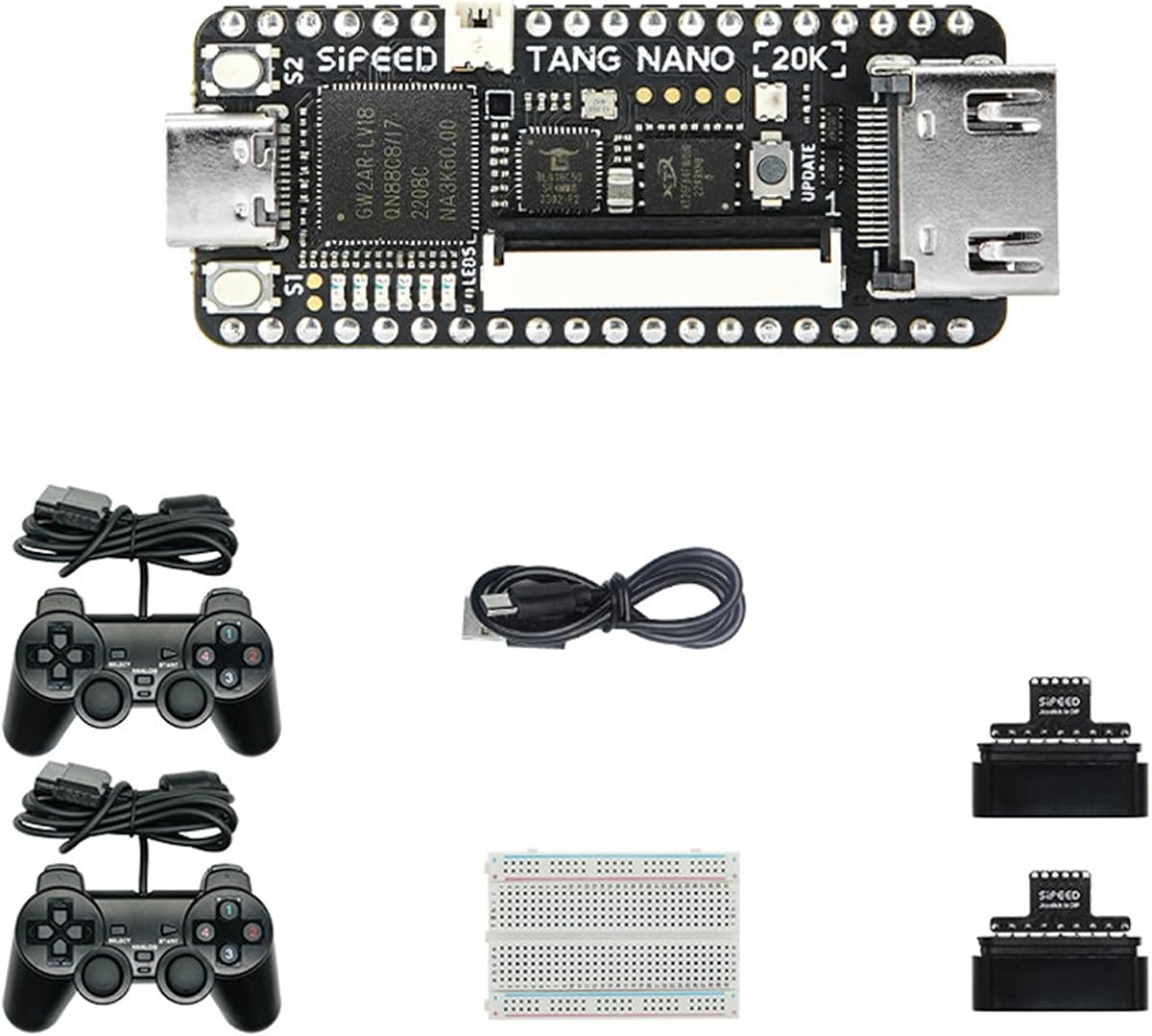
Sipeed Tang Nano 20K Kit
4.1Editor score
Affordable entry level FPGA
Runs RISC-V Linux
Compact single board design
Discover the top Fpga Retro Consoles for authentic classic gaming. We compare hardware, performance, and features to help you find the perfect retro gaming
Fpga Retro Consoles offer a unique blend of modern connectivity and authentic vintage gaming experiences. These devices use field programmable gate arrays to replicate original hardware behavior with high precision. Gamers seeking pixel perfect accuracy and low latency often prefer these over software based emulation solutions available today.
This guide compares ten leading models ranging from development boards to handheld devices. We evaluated each unit based on FPGA capacity, output options, and community support. Whether you need a desktop console or a portable player, this list covers diverse options for every setup and skill level.
Each pick highlights specific strengths like HDMI output, expandability, or preloaded games. You will find detailed specs and real world performance notes for every product. Please note that availability and offers may change over time, so verify details before purchasing your ideal retro gaming system.
4.1Editor score

4.8Editor score
4.5Editor score
This side-by-side comparison highlights key specifications across all ten selected models. Use this table to quickly identify which device matches your specific gaming needs and technical requirements for authentic retro experiences.


This Sipeed Tang Console stands out as a top choice for enthusiasts who want more than just a game player. It functions as a powerful development board while delivering smooth retro gaming performance. Its flexible design supports various emulator cores and offers significant expansion capabilities.
We may earn a commission when you buy through this link, at no additional cost to you.
The inclusion of a BL616 MCU allows for running dedicated firmware that enhances debugging and functionality. Users can connect to monitors via HDMI for high resolution display. The board also supports USB JTAG and UART, making it robust for custom integrations.
While the price reflects its advanced features, it requires some technical knowledge to fully leverage its capabilities. This trade-off is acceptable for developers who need a portable unit that can switch between gaming and prototyping tasks effortlessly.
It is perfect for makers who want a unified platform for FPGA work and classic games. We recommend this device for those comfortable with Linux dev environments and seeking strong hardware versatility.
Dual PMOD interfaces and PCIe connectors allow for extensive hardware customization and sensor integration.
Its small form factor makes it easy to integrate into portable setups or carry on the go.
We may earn a commission when you buy through this link, at no additional cost to you.
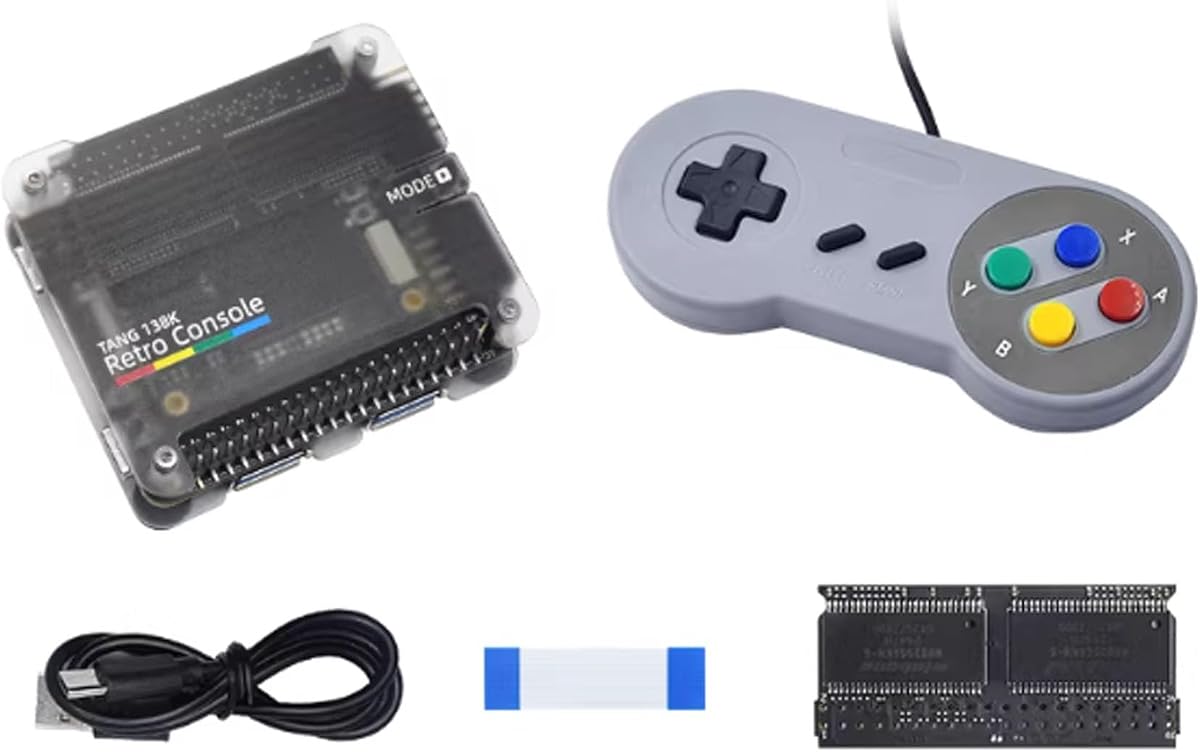
The Sipeed Tang Console 138K Retro is designed specifically for users looking to extend Raspberry Pi capabilities. It provides a high capacity FPGA solution that integrates seamlessly with modern single board computers. This makes it ideal for retro gaming setups that need extra processing power.
We may earn a commission when you buy through this link, at no additional cost to you.
Its premium build quality ensures reliable connections and stable performance during long gaming sessions. The HDMI output delivers clear visuals suitable for various monitors. Developers will appreciate the dual PMOD ports for adding custom hardware components.
However, its specialized nature means it may not appeal to those wanting a standalone console. The learning curve for integration can be steep for non technical users. These limitations are acceptable given its focused performance for Pi 5 integrations.
We recommend this for advanced users who need a reliable HAT for FPGA tasks. It brings powerful retro capabilities to the Pi ecosystem with minimal overhead and solid engineering.
The PCIe HAT design ensures native support for Raspberry Pi 5 hardware features.
HDMI connectivity supports standard resolutions for crisp and clear retro visuals.
We may earn a commission when you buy through this link, at no additional cost to you.
This model represents the premium end of FPGA retro consoles with robust hardware. It combines a large FPGA with a RISC-V hard core to handle emulation and system tasks efficiently. The result is a versatile device capable of running demanding classic games smoothly.
We may earn a commission when you buy through this link, at no additional cost to you.
Its fanless design ensures silent operation which is perfect for living room setups. The onboard memory and high speed interfaces support extensive game libraries and fast loading. USB3 connectivity provides ample bandwidth for modern controllers.
While the cost is significant, the performance and engineering justify it for serious enthusiasts. Users should be prepared to invest time in setup to unlock its full potential. The trade-off is worth it for those seeking top tier accuracy and stability.
We highly recommend this for users who prioritize performance and quiet operation. It stands as a powerful solution for high fidelity retro gaming experiences without noise or lag.
With only 5W power consumption and no fans, it runs silently in any environment.
The integrated RISC-V core allows for system management without needing external controllers.
We may earn a commission when you buy through this link, at no additional cost to you.
The Tang Nano 20K offers an accessible entry point into FPGA retro gaming. It includes the necessary memory and logic resources to run standard console emulators efficiently. This makes it a great starting point for hobbyists wanting to build their own system.
We may earn a commission when you buy through this link, at no additional cost to you.
Its onboard debugger simplifies development tasks by allowing direct chip access. The board supports various display interfaces which gives flexibility in how users output their games. This openness encourages learning and customization beyond just playing games.
Users may find the setup process technical but the rewards are substantial. The RAM limit is manageable for 8-bit and 16-bit systems though 32-bit may be tight. This trade-off is acceptable given the low cost and high potential.
We suggest this board for learners and budget conscious builders. It provides a strong foundation for creating custom retro experiences without needing expensive equipment.
Multiple output options allow for connection to different screens and custom setups.
Community driven development ensures continuous improvement and available projects.
We may earn a commission when you buy through this link, at no additional cost to you.
This kit packages the Tang Nano 20K into a complete unit ready for Linux use. It brings open source flexibility to retro gaming allowing users to customize the operating system. The Linux support adds a layer of versatility that sets it apart from closed consoles.
We may earn a commission when you buy through this link, at no additional cost to you.
The BL616 chip handles debugging tasks efficiently. It supports standard ports like HDMI and MicroSD for storage and display. This combination makes it easy to deploy in portable projects. The compact design fits well into custom handheld builds.
While not suited for heavy graphical workloads it handles classic 2D games well. The learning curve is steeper than prebuilt systems but the control is unmatched. This trade-off suits those wanting full system authority over their console.
We recommend this for budget conscious makers who want Linux integration. It serves as a powerful tool for building custom retro hardware with modern software support.
RISC-V Linux support allows for a flexible and familiar operating system interface.
All essential components are included to start development immediately without extra costs.
We may earn a commission when you buy through this link, at no additional cost to you.
This variant focuses on delivering a solid Linux experience for retro gaming. It leverages the power of the GW2AR-18 chip to handle emulation loads. The open nature of the software means users can tweak the system to suit their specific needs.
We may earn a commission when you buy through this link, at no additional cost to you.
The debugger support makes it easier to troubleshoot issues during development. Users benefit from direct access to the board for testing and configuration. This level of access is rare in consumer grade devices.
The reliance on Linux images means performance can vary. Users should choose well maintained images for the best results. This trade-off provides flexibility at the cost of some simplicity compared to fixed systems.
We suggest this for developers who want to manage their own OS. It is an excellent choice for those seeking a customizable retro gaming environment.
Open source access allows the community to contribute improvements and new features regularly.
Built-in JTAG debugging tools help users resolve technical issues efficiently.
We may earn a commission when you buy through this link, at no additional cost to you.
The Arduboy FX-C bridges the gap between a handheld console and a coding tool. It comes preloaded with a large library of classic games so users can start playing immediately. This unique approach makes it an ideal gift for students and hobbyists.
We may earn a commission when you buy through this link, at no additional cost to you.
The built-in I2C link cable allows for multiplayer battles without external controllers. Its compact size means it fits easily in a wallet for gaming on the go. The OLED screen provides good contrast even in bright conditions.
While it lacks the power for complex emulation its focus on 8-bit titles is a strength. Coding capabilities add educational value that extends beyond simple entertainment. The trade-off is acceptable for those interested in learning software development.
We recommend this for beginners and STEM educators. It offers a fun way to learn programming while enjoying nostalgic gaming experiences.
Direct USB-C multiplayer connections make head-to-head battles simple and reliable.
At 5mm thick it is easy to carry anywhere for instant gaming sessions.
We may earn a commission when you buy through this link, at no additional cost to you.
The Trimui Brick Pro stands out with its large display and modern controls. It uses high performance hardware to ensure smooth gameplay across various classic systems. The IPS screen delivers vibrant colors that enhance the retro experience.
We may earn a commission when you buy through this link, at no additional cost to you.
Battery life is a strong point with the 5000mAh cell lasting through long trips. Users benefit from dual USB-C ports for charging and data. The device supports multiple languages making it accessible to a wide range of users.
One limitation is the lack of an included memory card which requires extra purchase. Users must be comfortable downloading and installing games themselves. This trade-off gives users full control over their library without bloatware.
We recommend this for users wanting a powerful portable device with a big screen. It is excellent for travel and serious handheld gaming enthusiasts.
The large IPS panel provides bright and clear visuals for detailed retro graphics.
Hall effect technology ensures accurate input with no drift over time.
We may earn a commission when you buy through this link, at no additional cost to you.
This handheld offers a Linux based system that balances flexibility with convenience. It comes ready to play with preloaded titles that cover many classic eras. The device design is comfortable for long gaming sessions.
We may earn a commission when you buy through this link, at no additional cost to you.
Linux provides users with the ability to update their software and manage files easily. This openness is rare in closed systems and adds long term value. It handles most retro emulators well due to efficient resource management.
However, users new to Linux might find configuration intimidating initially. Battery life is decent but depends on the specific game being played. These trade-offs are standard for open handheld systems.
We suggest this for users who want a Linux handheld with out of the box usability. It serves well as a reliable portable gaming device for enthusiasts.
Linux OS allows for deep customization and software updates over time.
Preloaded games ensure immediate access to classic titles without setup.
We may earn a commission when you buy through this link, at no additional cost to you.
The Trimui Brick PRO is a fully open device designed for total control. It features a high quality laminated screen that offers excellent viewing angles. Users can build their own game library without pre-installed clutter.
We may earn a commission when you buy through this link, at no additional cost to you.
Hall effect joysticks ensure durability and accurate analog input. The battery capacity supports long travel sessions. USB-C charging allows for fast power replenishment when needed.
While it lacks pre-installed games this allows users to curate their own experience completely. Setup is straightforward but requires some time. This trade-off is ideal for purists who want no restrictions.
We recommend this for advanced users seeking a customizable handheld experience. It combines modern hardware with an open system for ultimate flexibility.
No pre-installed games let you build a clean library tailored to your tastes.
Hall effect joysticks provide accurate input that stays consistent over time.
We may earn a commission when you buy through this link, at no additional cost to you.
Choosing the right FPGA retro console involves evaluating hardware capabilities and usability features. This guide breaks down key factors to help you make an informed decision.
The core of any FPGA retro console is its logic cell capacity measured in LUTs. Higher capacity allows for more complex emulation cores like Sega Saturn or Dreamcast. Entry level boards may focus on 8-bit and 16-bit systems only.
Look for boards with at least 60K LUTs for broad compatibility across classic systems. This ensures you can run a wider range of games without performance issues.
Modern gaming requires clean video signals which HDMI output provides. Check if the device supports high refresh rates to reduce motion blur. Some boards offer RGB output for purists who use CRT displays.
Select a model with HDMI 1080P support for compatibility with modern TVs. This ensures sharp visuals without needing adapters or converters.
Decide if you want a handheld or a desktop unit. Handhelds have integrated screens and batteries while desktops rely on external monitors. Handhelds offer travel convenience whereas desktops offer expandability.
If you play mostly at home a desktop unit offers better cooling and power options. For travel choose a handheld with a large battery and compact design.
Some units run Linux which allows for greater customization. Others use proprietary interfaces that are easier to use but less flexible. Linux systems require more initial setup but offer powerful community features.
Choose Linux if you want to tweak the system or add custom apps. Proprietary systems are better for plug-and-play simplicity without technical hurdles.
Ports like USB, SD, and GPIO are vital for connecting controllers and accessories. FPGA boards often have PMOD headers for adding custom hardware. Good connectivity extends the console's functionality over time.
Ensure the device has enough USB ports for controllers and fast storage. Expansion headers are a plus if you plan to build custom inputs.
Materials matter for longevity especially if you use a handheld. Metal cases dissipate heat better than plastic which helps performance. Hall effect joysticks prevent stick drift common in cheap units.
Look for units with sturdy cases and high quality buttons. This prevents wear and tear ensuring your console lasts for years.
Strong community support means more guides and pre-made software. Good documentation simplifies setup and troubleshooting. Open source projects often have active forums for help.
Check if the brand provides clear manuals and SDKs. Active communities ensure you can find solutions quickly if issues arise.
Some consoles are ready out of the box while others need flashing. Consider your technical skills before buying a dev board. Complex setup can be rewarding but time consuming.
Pick a user-friendly device if you just want to play games. Choose a dev board if you want to learn FPGA programming deeply.
Start by installing the correct firmware or OS on your device. For dev boards you will need to compile cores and flash them using the provided tools. Follow manufacturer guides to ensure software compatibility.
Connect your device to a monitor via HDMI and plug in power. Use USB ports to attach controllers and verify input mapping in settings. If using a handheld charge the battery fully before first use.
Keep your device clean by wiping the screen and ports regularly. Store in a cool dry place to avoid heat damage to components. Update firmware periodically to get performance improvements and fixes.
FPGA retro consoles use hardware logic to replicate original systems instead of software. This provides near zero latency and authentic signal timing that software emulators struggle to match. It ensures games feel exactly as they did on original hardware.
These devices are optimized for classic systems like NES and SNES. They generally cannot handle modern 3D games due to FPGA limitations. Their strength lies in accurate 8-bit and 16-bit emulation.
Some models come with preloaded games but most allow you to load your own files. You will need to download game files legally from your own backups. This ensures you have a tailored library for your needs.
Setup complexity varies from plug-and-play handhelds to technical dev boards. Basic users should pick pre-configured models for immediate play. Advanced users may enjoy building their own systems from scratch.
Most devices support standard USB controllers or wireless options via adapters. Some have specific GPIO ports for custom wiring. Check compatibility before buying third-party accessories.
Handhelds generally offer between 3 to 6 hours of play time depending on usage. Larger batteries help extend this duration for longer sessions. Charging times vary from 2 to 4 hours for full recharge.
The Sipeed Tang Console models stand out for their versatility and hardware performance. They offer strong support for developers and gamers alike. For beginners the Arduboy FX-C provides immediate playability and coding fun.
Prioritize FPGA capacity and display options based on your favorite game systems. Open source devices give more control but require technical patience. Consider how much you value portability versus raw performance.
Always verify current availability and offers before purchasing to ensure you get the best deal. These devices evolve quickly with community updates and new releases. Enjoy your authentic retro gaming journey with the right hardware.