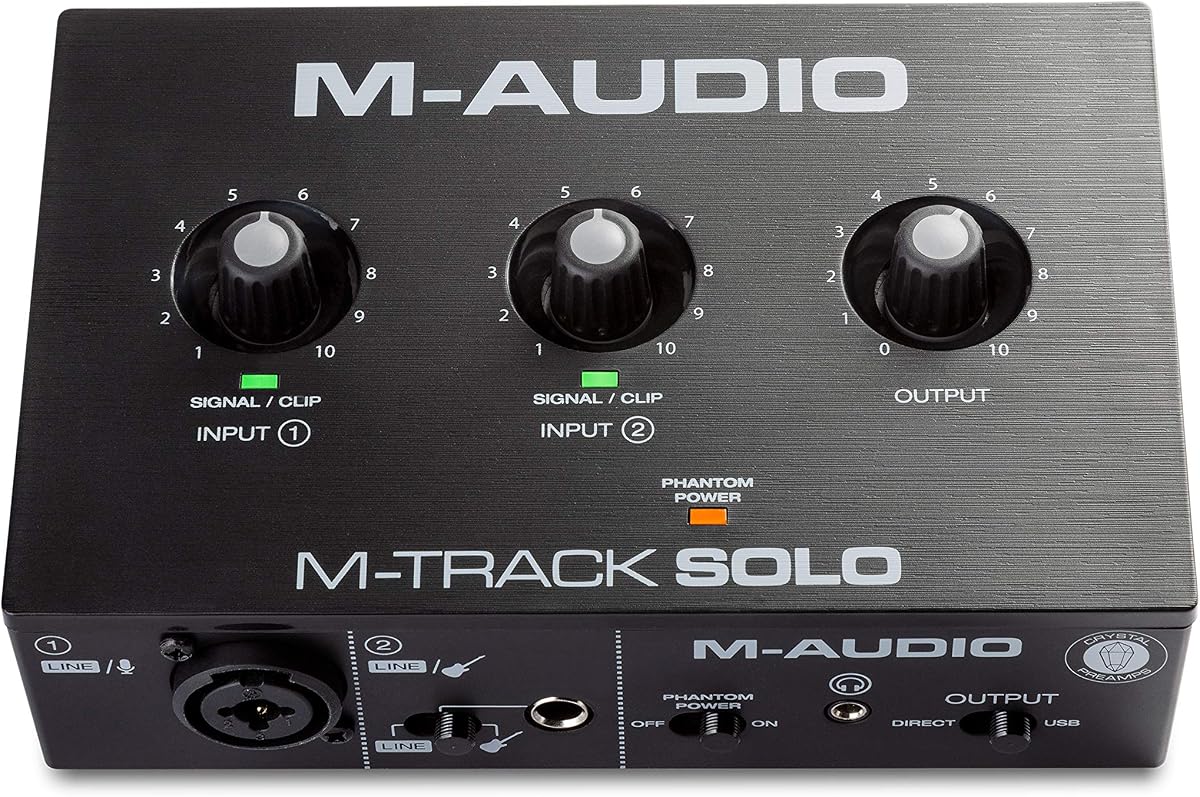
M-AUDIO M-Track Solo USB Audio Interface
4.3Editor score
One combo XLR input
Crystal Preamp included
Zero latency monitoring
Explore our expert guide comparing the top Firewire Audio Interface for PC options for studio recording and streaming needs across various budgets.
Finding the right Firewire Audio Interface for PC can transform your home studio into a professional recording environment. These devices connect your instruments and microphones to your computer with minimal latency and high fidelity.
We analyzed ten top-rated models focusing on compatibility, sound quality, and build durability. Our comparison includes legacy FireWire options alongside modern USB alternatives that offer similar performance for PC users today.
Each pick highlights specific strengths like preamp quality or driver stability. Note that prices fluctuate frequently so check current listings before purchasing your ideal audio interface for your setup.
4.3Editor score

4.6Editor score

5.0Editor score
This side-by-side comparison highlights key specifications and features across ten leading models suitable for PC users seeking high-quality audio capture solutions.




The PCIE-1394A FireWire Card offers a crucial solution for users needing to connect legacy devices to modern PCs. With a 4.4 rating it stands out as the top pick for expanding connectivity options effectively.
We may earn a commission when you buy through this link, at no additional cost to you.
It supports the IEEE 1394A FireWire 400 protocol allowing data transfer rates up to 400Mbps. The card auto detects connected devices and negotiates speeds between 100Mbps and 400Mbps seamlessly.
Some users may need to install Windows Legacy Drivers depending on their specific PC settings. This minor hurdle is acceptable given the card enables modern systems to interface with older DV camcorders and audio gear.
If you own vintage audio hardware that relies on FireWire this card is essential. It bridges the gap between old tech and new PCs without requiring expensive replacements for your existing setup.
Adds four ports with both 6Pin and 4Pin connectors for diverse legacy device support.
Compatible with Windows 98 through 11 ensuring broad utility across desktop environments.
We may earn a commission when you buy through this link, at no additional cost to you.
The RME Fireface UFX II earns a perfect 5.0 rating for its exceptional performance in professional studio environments. It delivers 24-bit/192kHz resolution with 4 mic preamps for top-tier capture.
We may earn a commission when you buy through this link, at no additional cost to you.
Featuring 30-in/30-out capabilities it handles massive routing needs effortlessly. The ARC USB Remote allows convenient control from your desk without touching the interface directly.
While expensive it justifies the cost with unmatched stability and sound quality. The learning curve exists but mastering its features unlocks powerful routing options unavailable in cheaper units.
Professional producers seeking zero latency and maximum channel counts should choose this model. It remains a benchmark for high-end USB audio interfaces on PC systems.
Supports 30 inputs and outputs allowing complex multi-track recording sessions.
Integrates ARC USB for easy parameter adjustments during live recording.
We may earn a commission when you buy through this link, at no additional cost to you.
Rated 4.4 the M-AUDIO M-Track Duo offers the best value for new creators needing reliable recording on a budget. It delivers pristine 48kHz audio resolution suitable for most streaming tasks.
We may earn a commission when you buy through this link, at no additional cost to you.
Its two combo XLR inputs support microphones and instruments with phantom power. The transparent Crystal Preamps ensure clean sound capture even in noisy environments.
While it lacks higher sample rates found in premium units the included MPC Beats software adds significant production value. Users get a complete package for starting their music career.
Beginners looking for an affordable interface with solid performance should buy this. It balances cost and quality effectively for podcasting and basic home recording.
Two combo jacks handle XLR mics and instruments seamlessly.
MPC Beats provides essential production tools for immediate use.
We may earn a commission when you buy through this link, at no additional cost to you.
The Focusrite Scarlett 2i2 4th Gen holds a 4.6 rating as a leading general-purpose interface. Its 120dB dynamic range rivals flagship units found in big studios worldwide.
We may earn a commission when you buy through this link, at no additional cost to you.
Auto Gain automatically sets the perfect level for your mic or guitar to prevent clipping. Clip Safe further protects recordings from distortion ensuring professional results.
Air mode adds presence and harmonic drive to vocals lifting them to the front of the mix. This sonic characteristic is highly valued by modern home producers.
Whether recording vocals or guitar this unit provides everything needed for a hit song. It is the ideal balance of features and sound for most PC users.
Smart Auto Gain eliminates guesswork when setting input levels.
Air mode enriches vocal tracks with professional harmonic detail.
We may earn a commission when you buy through this link, at no additional cost to you.
Rated 4.3 the RME Fireface UCX II offers a solid mix of channels and performance. It supports 20-in/20-out with USB 2.0 for reliable high-fidelity recording.
We may earn a commission when you buy through this link, at no additional cost to you.
Its compatibility extends to macOS Windows and iOS making it versatile for mobile setups. The build quality ensures durability during travel or daily studio use.
While USB 3.0 interfaces exist this unit provides sufficient bandwidth for most tasks. Users appreciate the stability of RME drivers which rarely crash during sessions.
Musicians requiring flexibility across platforms will find this model appealing. It delivers consistent performance without the complexity of higher-end rack units.
Works seamlessly across Windows macOS and iOS environments.
20 inputs allow recording multiple instruments simultaneously.
We may earn a commission when you buy through this link, at no additional cost to you.
The RME Fireface UFX III holds a perfect 5.0 rating for users needing maximum connectivity. It offers 94-in/94-out channels with USB 3.0 speed for rapid data transfer.
We may earn a commission when you buy through this link, at no additional cost to you.
Built-in DSP effects allow real-time processing without taxing the CPU. This feature is invaluable for complex mixes requiring multiple plugins during recording.
Direct USB Recording lets you save to external drives without a computer. This flexibility supports live sound engineering and field recording scenarios.
Professional studios requiring extensive I/O and speed will appreciate this interface. It represents the pinnacle of USB audio interface technology available today.
Onboard DSP reduces CPU load during intensive recording sessions.
USB 3.0 ensures fast data handling for large track counts.
We may earn a commission when you buy through this link, at no additional cost to you.
Also achieving a 5.0 rating the RME Fireface 802 FS offers a balanced feature set. It provides 30-in/30-out with USB 2.0 and includes 4 high-quality mic preamps.
We may earn a commission when you buy through this link, at no additional cost to you.
Two headphone outputs allow monitoring for both artist and engineer simultaneously. This capability is essential for live tracking scenarios where communication is key.
ADAT and S/PDIF I/O support expanding digital connectivity options. Users can link additional converters or preamps to grow their studio setup.
Engineers seeking a reliable workhorse with extensive monitoring tools should choose this. It combines sound quality with practical design for professional applications.
Dual headphone outputs facilitate shared monitoring during sessions.
ADAT connectivity allows adding more channels via external units.
We may earn a commission when you buy through this link, at no additional cost to you.
Rated 4.4 the Alloy Red 2×2 Interface delivers high-fidelity 24-bit/192kHz capture in a compact design. It uses USB-C for both data and power ensuring a clean setup.
We may earn a commission when you buy through this link, at no additional cost to you.
Illuminated LED rings on gain knobs provide visibility in dim studios. This aesthetic touches functionality making it easier to adjust levels quickly.
Zero-latency monitoring via Direct Monitor ensures you hear your performance instantly. The 3.5mm headphone jack adds convenience for standard headset users.
Mobile creators seeking a stylish and powerful portable interface will enjoy this. It bridges the gap between professional sound and modern design.
Bus-powered USB-C design eliminates need for external power supplies.
Illuminated knobs enhance usability in low-light environments.
We may earn a commission when you buy through this link, at no additional cost to you.
With a 4.3 rating the M-AUDIO M-Track Solo is the ideal entry-level choice for beginners. It delivers 48kHz resolution using a transparent Crystal Preamp for clean sound.
We may earn a commission when you buy through this link, at no additional cost to you.
It offers one combo XLR input for mic or guitar plus a line input. This simplicity is perfect for podcasters or solo artists just starting out.
Zero latency monitoring ensures you hear yourself without delay while recording. The included MPC Beats software provides a full production suite for creation.
Solo creators needing a simple and cheap solution should look no further. It removes complexity while delivering essential audio quality for your projects.
Minimalist design reduces confusion for new users.
Crystal Preamp ensures noise-free capture for vocals.
We may earn a commission when you buy through this link, at no additional cost to you.
Rated 4.3 the PreSonus AudioBox 96 offers incredible value with included software worth over 1000 dollars. It features 2 Class-A mic preamps for high-quality sound capture.
We may earn a commission when you buy through this link, at no additional cost to you.
MIDI I/O allows connecting keyboards and controllers directly to the interface. This expands creative possibilities beyond audio recording to full production.
The mixer control lets you create custom blends between inputs and playback. Zero latency monitoring is achieved via software or hardware settings easily.
Home producers seeking a complete package with instruments and software should pick this. It delivers essential features for music production at an attractive price.
Includes Studio One Artist and other tools for full production.
Physical MIDI ports integrate hardware controllers seamlessly.
We may earn a commission when you buy through this link, at no additional cost to you.
Selecting the right interface depends on your recording needs and existing gear. This guide outlines key factors to consider for optimal performance.
Modern PCs often lack FireWire ports so USB-C or USB 3.0 interfaces are more common. Ensure your PC has the necessary ports or consider PCIe adapters for legacy hardware.
Prioritize interfaces that match your computer's available ports for stable data transfer.
Count how many instruments and microphones you need to record simultaneously. A 2-in/2-out interface works for solo artists while larger sessions need 8 or more inputs.
Choose an interface that matches your current setup with room for future expansion.
Mic preamps boost signals from microphones to line level. Good preamps introduce less noise and add desirable warmth or transparency to your recordings.
Look for high-gain preamps with low noise floors for professional vocal capture.
Higher rates like 192kHz capture more audio detail but require more storage and power. 24-bit depth ensures low noise and dynamic range for clean recordings.
Standard 48kHz/24-bit suffices for most music streaming and podcast projects.
Stable drivers are crucial for avoiding crashes and latency issues on PC. Research if the brand provides regular updates for your specific operating system version.
Opt for brands known for robust driver support like RME or Focusrite.
Condenser microphones require 48V phantom power to function. Ensure your interface provides this if you plan to use these sensitive studio mics.
Check if phantom power is global or per channel based on your needs.
Many interfaces come with DAWs and plugins which add value. Software like Ableton Lite or Pro Tools Intro helps you start recording immediately.
Assess the included software against your production goals before buying.
Durable knobs and casing ensure longevity during transport or daily use. Metal enclosures often dissipate heat better and resist wear over time.
Consider a rugged build if you plan to take the interface to gigs.
Connect the interface to your computer using the appropriate cable like USB-C or FireWire. Ensure it is properly seated in the port before powering on to avoid connection errors.
Install the latest drivers and software from the manufacturer's website. Restart your computer after installation to ensure all system files are correctly registered for stable operation.
Store the interface in a cool dry place when not in use. Dust covers and careful cable handling will extend the lifespan of the jacks and controls over time.
Yes if your PC has a PCIe slot you can install a FireWire expansion card. Alternatively use a Thunderbolt to FireWire adapter if your motherboard supports Thunderbolt.
USB 3.0 offers faster data transfer speeds which allows higher sample rates and lower latency. However USB 2.0 is sufficient for most 24-bit/192kHz recording tasks.
No phantom power is only needed for condenser microphones. Dynamic microphones do not require this voltage and can operate with it turned off.
Check if the device is properly connected and powered. Install the latest drivers and restart the PC to ensure the system recognizes the hardware.
For music and podcasting 48kHz or 96kHz at 24-bit is standard. Higher rates like 192kHz are reserved for archiving or mastering specialized audio.
Yes but it requires specific software configuration like aggregate devices or ASIO drivers. This setup can be complex and may introduce latency if not optimized.
The M-AUDIO M-Track Solo and Focusrite Scarlett 2i2 stand out for beginners seeking quality at affordable price points. These models deliver essential features without overwhelming complexity.
For professionals the RME Fireface UFX III and UFX II offer unmatched channel counts and stability. Their robust drivers ensure smooth operation during demanding multi-track sessions.
Remember to verify compatibility with your PC's ports and operating system before purchase. Prices change frequently so check current listings to secure the best deal for your budget.