
ESP32-S3-Nano Microcontroller
5.0Editor score
8MB PSRAM Integrated
Arduino and MicroPython Support
Compact Development Board
Discover the top Arduino Nano ESP32 boards for IoT projects. This guide compares features, connectivity, and performance to help you choose the right microcontr
The Arduino Nano ESP32 represents a significant leap in embedded development, combining powerful processing with seamless wireless connectivity. These compact boards are ideal for makers and professionals seeking robust IoT solutions without bulky hardware.
We evaluated ten leading models based on processor speed, wireless capabilities, memory, and ease of use. Our analysis focuses on real-world performance for projects ranging from smart home automation to wearable technology and industrial sensors.
Each selection highlights unique strengths, from budget-friendly options to premium boards with advanced interfaces. Prices and availability change frequently, so verify current details before purchasing to ensure you get the best value for your specific needs.
5.0Editor score

4.6Editor score

4.7Editor score
This side-by-side comparison highlights key specifications across ten top-rated development boards. Evaluate processor types, memory capacity, wireless standards, and unique features to find the perfect match for your next electronic project.


The Arduino Nano ESP32 stands out as a powerhouse for modern embedded development. With a 4.6 rating, it delivers reliable performance for complex IoT applications. Its dual-core processor ensures smooth multitasking even during intensive data processing tasks.
We may earn a commission when you buy through this link, at no additional cost to you.
Wireless connectivity is seamless with integrated Wi-Fi and Bluetooth 5.0. This allows direct communication with cloud platforms without extra modules. The USB-C port simplifies power delivery and programming compared to older micro-USB standards.
While the price is higher than generic alternatives, the official support and documentation justify the cost. HID support enables unique input device projects. These trade-offs are minimal compared to the robust feature set.
This board is ideal for developers needing official Arduino support with ESP32 performance. Whether building smart home devices or edge AI prototypes, it offers the best balance of power and usability.
The ESP32-S3 chip runs at 240 MHz, handling advanced algorithms like voice recognition efficiently.
Support for MicroPython allows rapid prototyping without deep C++ knowledge.
We may earn a commission when you buy through this link, at no additional cost to you.
This microcontroller offers incredible value with a perfect 5.0 rating. It includes an ESP32-S3R8 chip with generous memory, making it suitable for projects requiring heavy data storage. The high score reflects user satisfaction with performance.
We may earn a commission when you buy through this link, at no additional cost to you.
Memory is a key strength here with 8MB PSRAM and 16MB Flash. This capacity supports complex applications without constant data clearing. Switching between Arduino IDE and MicroPython is effortless for diverse development needs.
The main limitation is fewer official resources compared to Arduino branded boards. Community support is strong though. These constraints are acceptable given the significant cost savings and high feature count.
Perfect for budget-conscious makers needing premium specs, this board excels in smart home or sensor networks. It balances affordability with advanced wireless capabilities and memory.
8MB PSRAM ensures smooth operation when handling large sensor arrays or audio data.
Seamlessly switch between C++ and Python based on project complexity.
We may earn a commission when you buy through this link, at no additional cost to you.
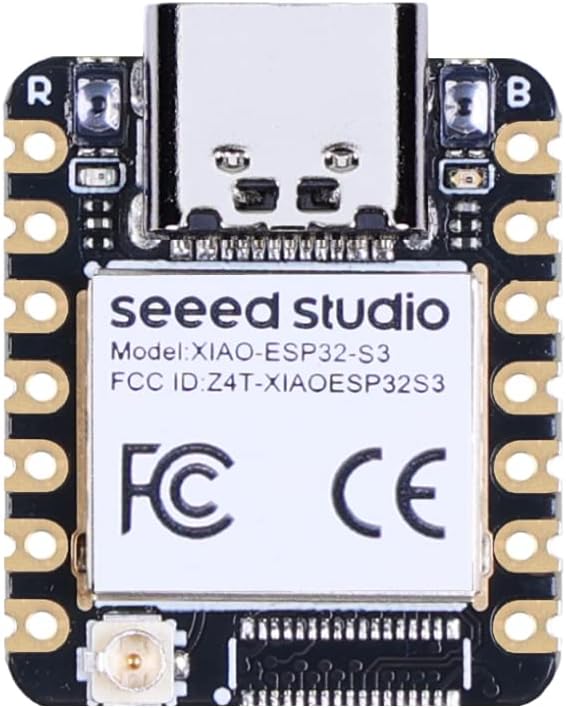
Seeed Studio delivers a powerful solution for wearable IoT with this XIAO board. Its 4.7 rating highlights reliable performance in space-constrained environments. The dual-core processor handles tasks efficiently despite the compact footprint.
We may earn a commission when you buy through this link, at no additional cost to you.
Power efficiency is exceptional with deep sleep modes drawing just 14μA. The integrated battery charge management simplifies mobile project builds. This design suits devices needing long operation on single batteries.
The small size can make handling difficult for beginners. Soldering connections often requires precision skills. However, the power savings and portability make these trade-offs worthwhile for wearable tech.
Ideal for robotics or health trackers, this board brings professional power to tiny enclosures. It prioritizes efficiency without sacrificing connectivity or processing capability.
Deep sleep modes drastically extend battery life for portable projects.
Thumb-sized footprint fits easily into wearable casings or small robots.
We may earn a commission when you buy through this link, at no additional cost to you.
This board targets advanced users needing image and voice processing. With a 4.8 rating, it delivers robust performance for edge AI applications. The RISC-V dual-core architecture provides unique capabilities over standard ESP32 chips.
We may earn a commission when you buy through this link, at no additional cost to you.
MIPI-CSI and DSI interfaces allow direct camera and screen connections without adapters. This simplifies visual projects significantly. High PSRAM capacity ensures smooth operation during video decoding tasks.
The specialized nature may be overkill for simple sensor projects. Complexity is high for standard IoT tasks. However, for multimedia applications, these features justify the specialized hardware.
Perfect for vision-based robotics or smart displays, this board pushes ESP32 capabilities further. It bridges the gap between microcontrollers and system-on-chip performance.
Dedicated hardware accelerators handle JPEG encoding and image signal processing efficiently.
Built-in security mechanisms protect firmware integrity during operation.
We may earn a commission when you buy through this link, at no additional cost to you.
This pack offers excellent value with three ready-to-use modules. A 4.4 rating confirms reliable performance across the units. The compact size suits mass production or distributed sensor networks efficiently.
We may earn a commission when you buy through this link, at no additional cost to you.
Castellated module design allows direct soldering onto carrier boards. This simplifies custom PCB design significantly. Integrated ceramic antennas ensure stable wireless performance without external components.
Lack of built-in USB ports on each module requires external adapters. Users needing direct USB connection may need extra wiring. However, for embedded integration, this design is highly efficient.
Ideal for batch projects or custom hardware integration, this set saves time and money. The multi-pack approach is smart for large-scale IoT deployments.
Castellated edges simplify custom circuit board assembly.
Built-in ceramic antenna maintains signal strength without extra parts.
We may earn a commission when you buy through this link, at no additional cost to you.
This kit is designed for those new to IoT development. With a 4.3 rating, it provides a gentle learning curve. It combines an ESP32 board with over 35 modules for diverse experiments.
We may earn a commission when you buy through this link, at no additional cost to you.
Step-by-step online tutorials guide users through basic circuits to complex automation. This structured approach builds skills effectively. Arduino IDE compatibility ensures easy programming without extra tools.
Bluetooth 4.2 is older than modern 5.0 standards found on newer boards. Some advanced features like MicroPython are not primary focus. But for education, these limitations are acceptable.
Perfect for students or hobbyists starting their journey, this kit covers basics comprehensively. It prioritizes learning and accessibility over cutting-edge hardware.
Over 30 projects provide clear progression from simple to advanced.
Includes sensors, motors, and screens needed for varied IoT experiments.
We may earn a commission when you buy through this link, at no additional cost to you.
Although using an ARM Cortex-M0+ instead of ESP32, this board is often grouped here for its IoT focus. A 4.5 rating reflects stable performance and security. It serves well for applications needing hardware-level encryption.
We may earn a commission when you buy through this link, at no additional cost to you.
The Secure Element ensures secure cloud communication for sensitive data. Built-in sensors reduce external wiring needs. Pre-soldered headers make breadboarding effortless without extra tools.
Processing power is lower than modern ESP32 models due to ARM architecture. This limits use for intensive edge computing. However, for secure sensor networks, this trade-off is worth it.
Ideal for secure smart home devices, this board prioritizes safety over raw speed. It simplifies IoT security implementation significantly.
Secure Element protects data privacy for cloud connected devices.
Onboard IMU and environmental sensors simplify initial prototyping.
We may earn a commission when you buy through this link, at no additional cost to you.
This classic ESP32 module offers dual-mode WiFi and Bluetooth at low cost. A 4.4 rating confirms consistent performance for general IoT tasks. It remains a popular choice for developers familiar with the platform.
We may earn a commission when you buy through this link, at no additional cost to you.
Integrated RF amplifiers ensure better signal range compared to some clones. FreeRTOS support enables real-time multitasking. The AP and STA modes simplify network setup for various use cases.
Bluetooth version is older than 5.0 found on newer boards. Features like MicroPython support are less integrated. Yet, the core functionality remains solid and proven over time.
Perfect for standard IoT devices like sensors or relays, this board delivers reliability. It is a cost-effective solution for established projects.
Supports AP, STA, and AP+STA modes for diverse network configurations.
Ultra-low power modes help extend battery life in remote devices.
We may earn a commission when you buy through this link, at no additional cost to you.
A 4.7 rating highlights strong value with three USB-C equipped boards. The USB-C connection simplifies power and programming significantly. Over-the-air update support allows remote firmware management easily.
We may earn a commission when you buy through this link, at no additional cost to you.
Dual-core performance reaches 240 MHz for standard tasks. Power-saving features help maintain efficiency in battery projects. Arduino IDE compatibility ensures broad community support.
Bluetooth 4.2 lacks some modern capabilities like high data rate. Advanced features like high RAM are not present. But for standard wireless tasks, these boards are sufficient.
Ideal for general hobbyist use, this set provides modern connectivity at a low price. It balances convenience with cost effectively.
OTA support lets you update code over WiFi without USB cables.
Reversible USB-C makes connection easier than older Micro-USB.
We may earn a commission when you buy through this link, at no additional cost to you.
The UNO R4 WiFi combines a Renesas RA4M1 processor with an ESP32-S3. A 4.7 rating indicates strong performance for mixed workloads. This unique dual-core design offers flexibility for complex industrial or home automation tasks.
We may earn a commission when you buy through this link, at no additional cost to you.
The 12×8 LED matrix provides visual feedback directly on the board. CAN bus support enables direct communication with automotive or industrial systems. High-precision DACs allow accurate analog signal control.
It is larger than the Nano form factor and costs more. Some simple projects may not need this advanced power. But for professional applications, it justifies the investment.
Perfect for advanced robotics or industrial IoT, this board bridges classic Arduino ease with modern connectivity. It offers unmatched versatility for serious developers.
CAN bus enables reliable communication with automotive or heavy machinery systems.
Integrated LED matrix displays status or data instantly.
We may earn a commission when you buy through this link, at no additional cost to you.
Choosing the right board requires balancing performance, connectivity, and physical constraints. This section details the factors that influence your decision.
Most boards use the ESP32-S3 with a dual-core Xtensa processor running at 240 MHz. Higher clock speeds and core counts allow faster data processing and multitasking. If your project involves machine learning or complex logic, prioritize models with dedicated accelerators.
Always check the chip model to ensure it meets your computational needs.
Wi-Fi and Bluetooth capabilities vary significantly. Look for Bluetooth 5.0 or BLE for better range and lower power consumption. Wi-Fi 6 support is rare but improves network density in crowded environments.
Confirm wireless standards match your device connectivity requirements.
Memory capacity determines how complex your sketches can be. Standard boards offer 32-bit RAM but premium ones include 8MB or more PSRAM. Flash memory holds firmware permanently, so larger capacity allows more code storage.
Select models with ample memory for large projects.
Battery-powered projects depend heavily on power efficiency. Boards supporting deep sleep modes can draw microamps of current during idle periods. Look for dedicated power management ICs for battery charging in portable devices.
Choose low-power models for battery operation.
Physical connection types impact integration ease. USB-C ports are now standard for modern cables. Headers that fit breadboards simplify prototyping. Specialty interfaces like CAN bus or MIPI cameras support industrial use.
Ensure the board supports your external hardware connections.
Most boards support Arduino IDE, but MicroPython compatibility expands options. If you prefer scripting over compiled languages, verify MicroPython support is available. Check if the manufacturer provides open-source libraries.
Pick a board compatible with your preferred language.
Dimensions matter for embedded enclosures. Nano-sized boards fit easily in wearables. Larger boards offer more ports but occupy more space. Castellated modules allow direct soldering for compact designs.
Measure your enclosure space before purchasing.
Official Arduino boards guarantee long-term support and documentation. Third-party clones may lack updates but offer lower costs. Consider community size and library availability for your chosen model.
Verify community resources exist for troubleshooting.
To begin, install the Arduino IDE or preferred development tool on your computer. Select the correct board model and upload a basic blink sketch to confirm hardware functionality. This step ensures drivers are recognized before complex coding.
For battery projects, connect a lithium polymer battery to the dedicated charge pin. Use low-power sleep modes to extend operation time. Ensure you test discharge curves to size batteries correctly for your use case.
Protect boards from moisture and static discharge during handling. Store them in anti-static bags when not in use. Regularly check firmware updates to benefit from security patches and new features provided by the manufacturer.
The Nano ESP32 uses newer ESP32-S3 chips offering better performance and Bluetooth 5.0 support. It also features USB-C connectivity which simplifies cabling. Older models lack these modern conveniences but work for basic tasks.
Yes, several boards explicitly support MicroPython for easier coding. This allows using Python syntax instead of C++. Ensure the board you select lists MicroPython compatibility in its specifications before purchasing.
ESP32 includes Bluetooth connectivity which ESP8266 lacks. It also has dual-core processors allowing more complex multitasking. The memory capacity is significantly higher for handling larger datasets.
Most have onboard regulators handling power from USB or battery sources. External regulators are needed only for high-current motors or specialized hardware. Check the power input limits in the documentation.
Use standard interfaces like I2C or SPI which connect easily to most sensors. Libraries in the Arduino IDE simplify driver integration. Ensure voltage levels match the sensor requirements.
Many boards support Over-the-Air updates via WiFi. This allows remote updates without physical connection. Check documentation to confirm OTA capabilities are available for your specific model.
We reviewed ten distinct options ranging from budget-friendly clones to premium official boards. Each offers unique strengths depending on whether you prioritize memory, connectivity, or power efficiency.
Focus on processing needs and power constraints when making your final selection. USB-C connectivity and MicroPython support are key features to consider for future-proofing your projects.
Prices and stock levels fluctuate regularly so verify current availability before buying. Ensure your chosen model fits your specific hardware requirements for successful implementation.