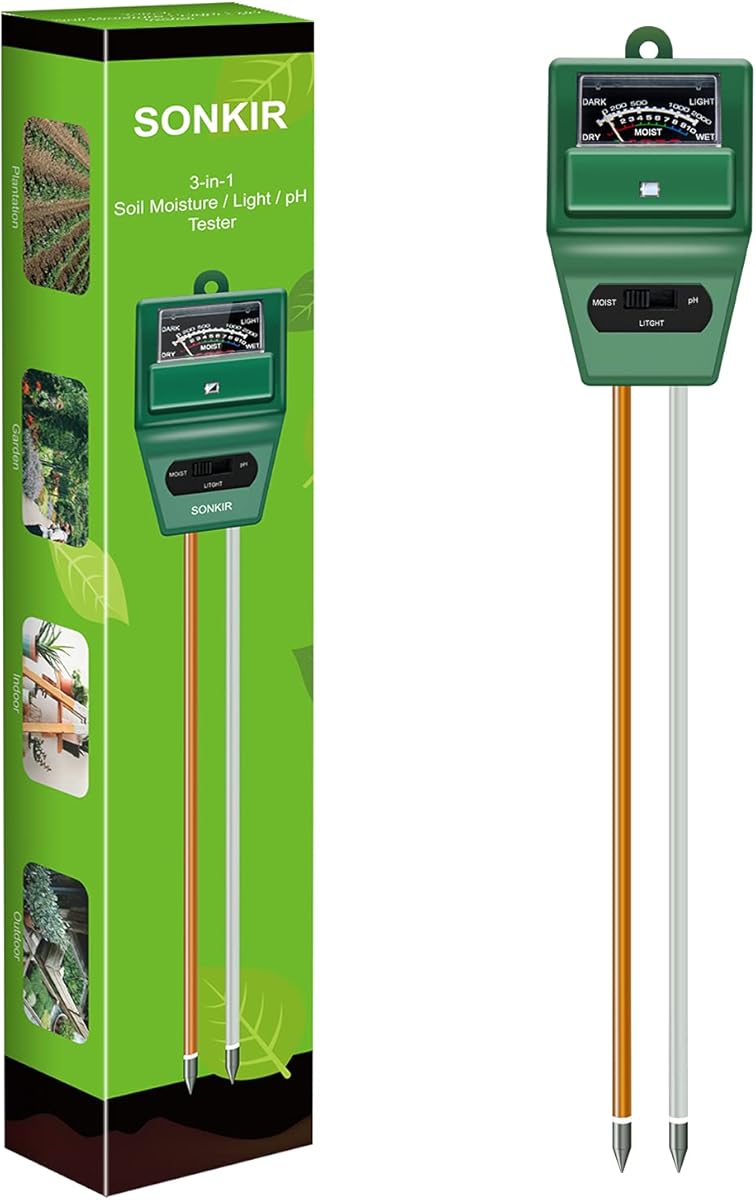
SONKIR Soil pH Meter
4.1Editor score
No battery needed
Three-in-one testing
Compact portable design
This guide compares the top Bluetooth soil pH meters available in October 2026 to help you choose the right digital tester for your garden and plants.
Finding the right soil monitoring tool is essential for healthy plants. Modern Bluetooth soil pH meters allow you to track acidity levels directly through your smartphone, ensuring precise care for your garden, greenhouse, or indoor pots.
We have evaluated ten leading models based on accuracy, connectivity, durability, and ease of use. Our comparison covers devices ranging from simple handheld probes to advanced wireless systems with expandable sensor arrays for large-scale monitoring.
Each pick highlights specific strengths such as app integration, solar power, or multi-parameter testing. Please note that prices and availability fluctuate regularly, so verify current details before making your final purchase decision.
4.1Editor score


4.0Editor score
The following table provides a side-by-side overview of key specifications for all ten models. This comparison helps you quickly identify which device offers the specific features you need for your unique gardening or agricultural requirements.


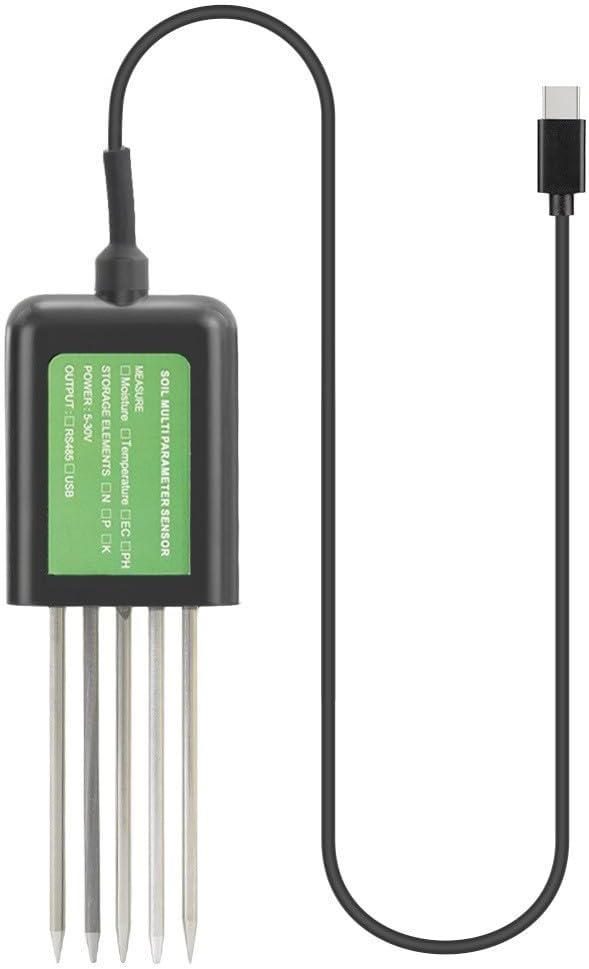


This 7-in-1 digital soil tester offers a broad range of measurements for plant care enthusiasts. With a strong rating, it promises accurate readings for moisture, pH, and temperature using advanced probe technology.
We may earn a commission when you buy through this link, at no additional cost to you.
The large LCD screen with backlight ensures readability in any lighting condition. You can insert the probe into the soil and receive precise data within seconds, making it ideal for quick checks.
While it offers many features, users should avoid using it in liquids or overly hard soil to prevent damage. Moistening dry test areas before measurement improves accuracy and device longevity.
This device is perfect for gardeners who want an all-in-one tool for indoor and outdoor plants. It simplifies the process of monitoring soil conditions effectively without needing multiple gadgets.
The device measures moisture, pH, temperature, light, and fertility, allowing comprehensive soil health checks.
Intuitive symbols and a large screen make it easy for beginners to understand and use immediately.
We may earn a commission when you buy through this link, at no additional cost to you.
This digital pH meter stands out for its ability to connect to a mobile app for data storage and tracking. It provides quick and accurate pH measurements suitable for both soil and various liquids.
We may earn a commission when you buy through this link, at no additional cost to you.
The robust conical steel probe protects the electrode from dirt and damage during use. Automatic Temperature Compensation ensures that readings remain accurate regardless of environmental temperature changes.
While the app adds value, it requires a stable Bluetooth connection to function properly. The backlight is helpful, but battery management is still necessary for consistent performance over time.
Ideal for tech-savvy gardeners, this meter helps you optimize plant growth with precise digital tracking. It works well for hydroponics, aquariums, and general gardening tasks alike.
Connect to the app to store pH levels and track changes over time for better plant decisions.
The waterproof design and steel probe ensure longevity in diverse environments like pools or gardens.
We may earn a commission when you buy through this link, at no additional cost to you.
This system introduces a unique wireless approach with solar-powered probes that stay in the soil. It tracks essential growing data like moisture, pH, and temperature for daily gardening decisions.
We may earn a commission when you buy through this link, at no additional cost to you.
The controller supports up to 32 probes, allowing you to monitor different areas without constant reinsertion. Data refreshes automatically every twenty minutes, ensuring you have up-to-date information.
The separate controller and probe design means you need to position the unit carefully for accurate readings. While innovative, the lower rating suggests potential connectivity or consistency issues for some users.
It is best for users who want long-term, automated monitoring of multiple garden beds. The solar feature eliminates battery changes for probes, making it a convenient choice for busy gardeners.
Expand your monitoring coverage by adding up to 32 probes for detailed landscape analysis.
Solar-powered probes reduce maintenance by removing the need for frequent battery replacements.
We may earn a commission when you buy through this link, at no additional cost to you.
The SONKIR model is a classic analog choice that eliminates the need for batteries entirely. It measures soil moisture, pH, and sunlight levels with a simple insertion and wait process.
We may earn a commission when you buy through this link, at no additional cost to you.
Its scientific design uses reliable materials to ensure consistent results without digital complications. The compact size makes it easy to carry around the garden or store in a toolbox.
While it lacks modern digital features, the simplicity is its main selling point for traditional gardeners. The lack of batteries means it works immediately upon purchase without extra costs or maintenance.
This meter is perfect for those who prefer straightforward tools without complex apps. It offers a reliable way to check soil conditions for home gardens, lawns, and farms effectively.
Insert the meter into the soil and read results instantly without needing any batteries or power source.
The upgraded technology ensures high-quality long-term use for indoor and outdoor soil analysis.
We may earn a commission when you buy through this link, at no additional cost to you.
This YINMIK pH probe offers immediate accurate readings without the need for slurries or mixing. It connects to an app to store data, allowing you to track soil health over time effortlessly.
We may earn a commission when you buy through this link, at no additional cost to you.
The tapered plastic dibber protects the electrode and helps in inserting the probe into various soil types. It is suitable for potted plants, gardens, and hydroponic solutions alike.
Users should note that setting up the app requires initial effort to ensure proper connectivity. However, the ability to add notes and view history makes the process worthwhile for long-term care.
If you want a digital tool that balances simplicity with data tracking, this is a strong candidate. It is particularly useful for plant owners who need to maintain precise pH levels for specific crops.
The included dibber shields the probe and simplifies insertion into different soil textures.
Store up to 1000 data points and check pH conditions real time via your mobile phone.
We may earn a commission when you buy through this link, at no additional cost to you.
This kit combines a pH meter and a moisture EC tester into one convenient package. The pH meter provides immediate accurate values, while the moisture meter uses FDR technology for precision.
We may earn a commission when you buy through this link, at no additional cost to you.
The stainless-steel dibber ensures the probe remains protected during testing. It is suitable for both soil and water, making it a versatile tool for hydroponic enthusiasts.
The package includes calibration solutions and a brush, which is a nice touch for maintenance. While the price is higher, the completeness of the kit justifies the cost for serious growers.
For users who need to check multiple parameters reliably, this combo saves time. It helps you make rational watering schedules and maintain nutrient balance efficiently.
Advanced FDR methods ensure accurate moisture detection for most plant needs without estimation.
Receive calibration solutions and tools included to ensure accurate readings from the start.
We may earn a commission when you buy through this link, at no additional cost to you.
This USB soil sensor offers a complete plant health monitoring solution with seven critical parameters. It connects directly to Android devices to view and export comprehensive soil data instantly.
We may earn a commission when you buy through this link, at no additional cost to you.
Built with IP68-rated construction, it withstands prolonged soil exposure with consistent results. The battery-free design allows it to work instantly when plugged in for immediate analysis.
While it offers high-end features like NPK analysis, the lower rating suggests potential usability issues for some users. Research and professional users may find the detailed data useful despite minor limitations.
It is ideal for agriculture and research settings where precise nutrient tracking is required. The ability to export data to Excel makes it a strong tool for detailed reporting and planning.
Measure NPK nutrients alongside pH and moisture for a complete soil profile.
Sealed construction with flame-retardant epoxy ensures longevity in harsh outdoor conditions.
We may earn a commission when you buy through this link, at no additional cost to you.
Bluelab is a trusted name in hydroponics, and the OnePen delivers on precision with lightning-fast readings. It adjusts for temperature automatically and maintains accuracy to within 0.01.
We may earn a commission when you buy through this link, at no additional cost to you.
The IP68 rating makes it fully waterproof, while the replaceable probe simplifies upkeep significantly. It floats if dropped in water, adding a layer of convenience for liquid testing.
Although it is a premium product, the build quality and engineering justify the cost for serious growers. The Edenic app allows for seamless data tracking and sharing across devices.
This device is best for professional growers or enthusiasts who demand high reliability. It serves as a culmination of decades of engineering expertise in measurement tools.
Extend the life of your tool with a double-junction pH probe that simplifies maintenance.
Enjoy ergonomic design and high-contrast screens for easy use in any lighting.
We may earn a commission when you buy through this link, at no additional cost to you.
The Kelway HB-2 measures pH from 3.5 to 8 and moisture from 0 to 100 percent without needing power. It is a straightforward tool that requires no chemical or water sources for testing.
We may earn a commission when you buy through this link, at no additional cost to you.
It allows for numerous readings over large areas easily, making it efficient for farmers and landscapers. The design is simple, focusing on delivering accurate data without unnecessary complexity.
While conditioning film is sold separately, the unit itself is a robust piece of equipment. It avoids electrical failures by relying on mechanical or analog principles for operation.
Choose this if you need a no-nonsense tool for field work. It is a practical choice for those who prioritize function over digital features in their garden or farm.
Operate without external electric power sources or chemicals for true field autonomy.
Take numerous readings quickly across large areas with ease and precision.
We may earn a commission when you buy through this link, at no additional cost to you.
This model measures Nitrogen, Phosphorus, Potassium, pH, and more with high stability and reliability. It is designed for agriculture and various industries needing comprehensive soil analysis.
We may earn a commission when you buy through this link, at no additional cost to you.
With large data storage capacity, you can record and display data in real time easily. The clip-on system allows you to attach the tool to your belt for effortless portability.
Exporting data to Excel via computer makes it convenient for detailed reporting and editing. The availability rate ensures you get consistent results when assessing soil conditions systematically.
If you need industrial-grade features for crop optimization, this is a solid choice. It helps you increase yields by providing deep insights into your soil's nutrient profile.
Supports extensive data storage and export to Excel for custom analysis and reporting.
Suitable for petrochemical, agriculture, and experimental use due to high accuracy.
We may earn a commission when you buy through this link, at no additional cost to you.
Selecting the right device involves considering accuracy, connectivity, and durability. This guide outlines key factors to help you make an informed decision for your specific gardening needs.
Accuracy is the most critical factor for a soil pH meter. Look for devices that offer automatic temperature compensation (ATC) to ensure reliable readings across different conditions. Regular calibration using buffer solutions or powders is essential to maintain precision over time. Check if the device includes these tools in the package to save on additional costs.
Bluetooth capability allows you to sync data with mobile apps for better tracking and analysis. This feature is particularly useful for gardeners who want to monitor trends over time without manual logging. Ensure the app is compatible with your smartphone operating system. Some devices allow exporting data to computers, which can be helpful for larger agricultural projects.
Since these devices are used outdoors, durability is a key consideration. Look for IP68 ratings which indicate waterproof and dustproof protection. A sturdy probe made of stainless steel or protected with a dibber will last longer against rough soil conditions. Consider the build quality to avoid frequent replacements due to damage.
Power options vary from battery-operated to solar or USB-connected models. Battery life should be sufficient for regular use without frequent changes. Solar probes are a great option for long-term monitoring as they reduce maintenance. USB models often require no batteries but need a constant connection to a device.
Decide how many soil parameters you need to monitor. Some meters measure only pH, while others combine moisture, temperature, light, and NPK nutrients. Choosing a multi-functional device can save money and space if you need comprehensive data. However, single-purpose meters might offer better accuracy for specific tasks.
The device should be intuitive to operate even for beginners. Features like clear displays, backlight, and quick response times enhance usability. Avoid models that require complex setup steps unless you are comfortable with technical configurations. Ease of use ensures you actually use the tool regularly for better plant care.
Prices vary significantly from budget-friendly analog models to premium digital ones. Determine a budget that balances cost with the features you need. Expensive does not always mean better, so read reviews to verify performance claims. Consider the long-term value including durability and maintenance requirements.
Ensure the device is suitable for your specific use case whether it is hydroponics, garden soil, or liquids. Some meters are designed only for soil while others can test water in pools or aquariums. Check the measurement range for pH to ensure it covers the needs of your plants. Versatility can be a huge plus for diverse gardening environments.
To begin using your meter, insert the probe into the soil to a recommended depth of about 10 centimeters. Wait for the reading to stabilize, usually within a few seconds or minutes depending on the model. Ensure the soil is slightly moist if it is too dry to get accurate results.
It is recommended to test your soil pH at least once or twice a year to monitor changes. If you notice issues with plant growth, more frequent testing can help identify sudden shifts. Consistent testing allows you to make timely adjustments to fertilizers or soil amendments.
Yes, many of these meters are designed to test both soil and water solutions. Check the product specifications to ensure it supports hydroponic nutrient solutions. Proper calibration is even more critical in hydroponics to maintain precise nutrient levels for healthy roots.
Inconsistent readings often result from a dirty probe or lack of calibration. Clean the probe gently with a soft brush and water before each use. Recalibrate the device using the provided buffer solutions to restore accuracy and reliability in your measurements.
Not all meters require batteries as some use solar power or USB connections. Analog models typically do not need any power source at all. However, digital Bluetooth models usually rely on batteries or rechargeable cells to operate electronic components.
Clean the probe with distilled water and a soft cloth after every use to remove soil residue. Avoid harsh chemicals that might damage the sensor. Let the probe air dry before storing it in a protective case to extend its lifespan.
Some advanced models support expandable probes allowing you to monitor multiple points with one controller. Check the manual to see how many probes your specific model supports. This feature is ideal for large gardens where soil conditions vary across different areas.
ATC ensures that pH readings remain accurate regardless of the temperature of the soil or water. Temperature affects the chemical activity and pH values so this feature adjusts the output accordingly. It is a valuable tool for outdoor gardening where weather conditions change frequently.
Higher-end models with NPK analysis and data export are suitable for professional use. Budget models may be better for home gardening due to limited precision. Choose a device that matches the scale and accuracy requirements of your farming operation.
We have reviewed ten distinct options ranging from simple analog tools to advanced digital systems. Each device offers unique benefits depending on your gardening goals and budget. The SONKIR meter remains a top choice for simplicity, while the Bluelab OnePen offers professional grade precision.