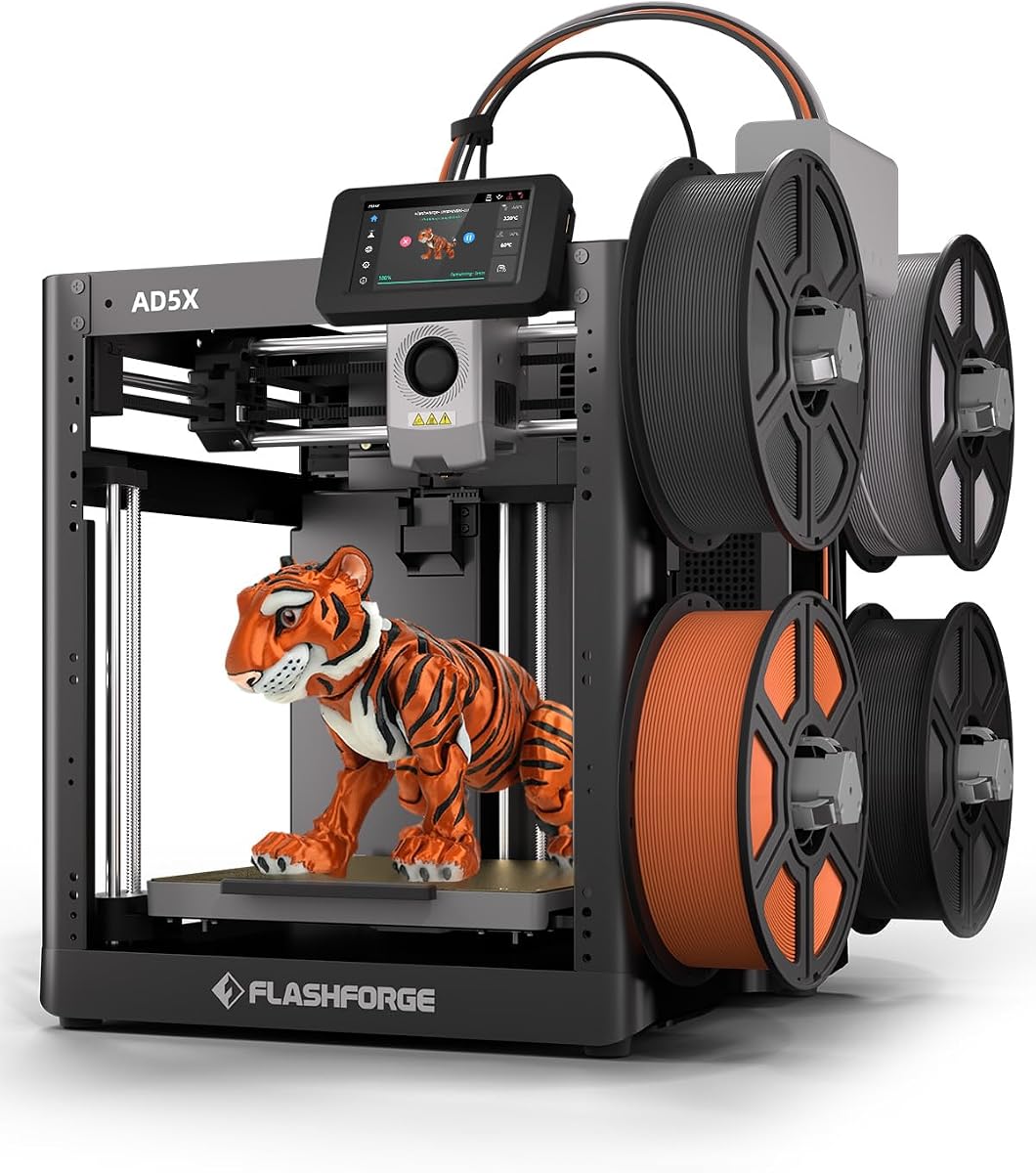
FLASHFORGE AD5X Multi-Color 3D Printer
3.9Editor score
600mm/s CoreXY Speed
1-Click Auto Leveling
Multi-Color Support
Compare the top 3D Printer for Fast Printing Speed models with speed specs and features to find the fastest reliable machine for your workshop.
Modern manufacturing demands speed without sacrificing quality. This guide explores the latest 3D Printer for Fast Printing Speed models engineered to deliver rapid results. These machines use advanced CoreXY systems and high-flow extruders to cut print times significantly while maintaining precise layer adhesion and dimensional accuracy for diverse projects.
We evaluated ten leading models based on maximum travel speeds, acceleration rates, and build volume capabilities. Each product was assessed for its ability to handle rapid prototyping and batch production efficiently. Our analysis focuses on real-world performance metrics including vibration compensation, auto-leveling reliability, and filament compatibility across common engineering materials.
Each pick highlights specific strengths for varying user needs from beginners to professionals. Look for consistent results, reliable speed, and intuitive features that streamline your workflow. Note that prices change frequently so check current listings before purchasing your ideal high-speed 3D Printer for Fast Printing Speed solution today.
3.9Editor score

4.7Editor score

4.5Editor score
This side-by-side comparison highlights key performance metrics across all ten models. We focus on speed specifications build volume, and unique features that define rapid printing capabilities for different users.



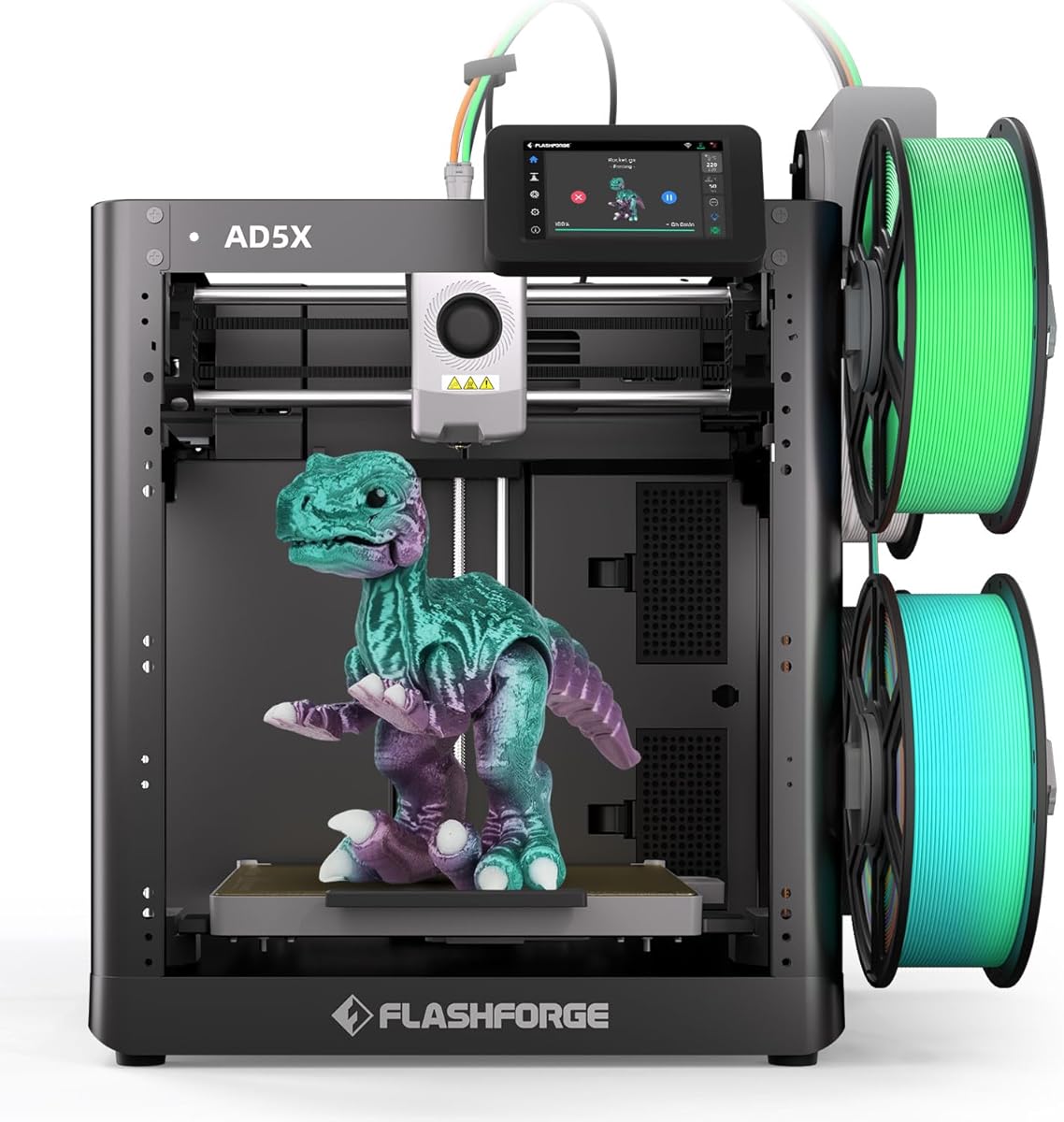
The FLASHFORGE AD5X delivers impressive performance for a budget-friendly option in the 3D Printer for Fast Printing Speed category. With a CoreXY structure and 600mm/s top speed, it handles rapid prototyping efficiently. Its 1-Click Auto Leveling ensures consistent bed adhesion without tedious manual adjustments every time.
We may earn a commission when you buy through this link, at no additional cost to you.
Key strengths include the ability to print with up to four colors simultaneously. The vibration compensation system helps maintain quality even at high acceleration of 20000mm/s². Direct drive extruder supports 300°C for versatile filament options like ABS or engineering materials beyond standard PLA.
Trade-offs include a compact 220x220x220mm build volume which limits larger projects. The 0.4mm nozzle is pre-installed but specialized tasks might require the optional 0.25mm or 0.8mm upgrades. These constraints are acceptable for most hobbyist and small business needs.
Ideal for users seeking speed and color without high cost. The Flash Maker app enables remote monitoring while resume printing saves power interruptions. This model is a strong recommendation for entry-level creators needing reliable rapid output.
Vibration compensation minimizes artifacts on high-speed prints ensuring smoother surfaces. This technology maintains dimensional accuracy even at top speeds.
Remote control via mobile app lets you check progress without physical access. It simplifies workflow for makers managing multiple printers.
We may earn a commission when you buy through this link, at no additional cost to you.
The Bambu Lab P2S Combo stands out as a top-tier 3D Printer for Fast Printing Speed solution with precision engineering. It achieves 600mm/s while maintaining sharp corners and smooth layers through PMSM Servo Extruder and Active Flowrate Compensation. Setup is remarkably fast with just 15 minutes from unboxing to first print.
We may earn a commission when you buy through this link, at no additional cost to you.
Key strengths include the AMS 2 Pro enabling effortless multi-color and multi-material prints. Filament drying at up to 65°C ensures material readiness. Adaptive Airflow System manages cooling and heat retention for various filaments while carbon filters maintain safe air quality in enclosed spaces.
Trade-offs involve the higher investment required compared to basic models. Only the Combo version supports multi-color printing meaning users must buy extra units. These costs are justified for professionals needing reliability and workflow efficiency in production environments.
Highly recommended for teams prioritizing quality and speed. MakerWorld integration provides access to over one million models. It is the definitive choice for advanced users wanting top performance with minimal intervention.
Automatically balances cooling to preserve overhangs or retain heat for engineering materials. This ensures consistent quality across diverse projects without manual tuning.
Detects print failures early to save materials and time. You can monitor remotely and stop bad prints before they waste resources.
We may earn a commission when you buy through this link, at no additional cost to you.
The Snapmaker U1 redefines multi-material printing with its unique 4-Toolhead System enabling fast tool swaps in just five seconds. As a 3D Printer for Fast Printing Speed it reduces waste and time significantly compared to traditional purging systems. CoreXY motion ensures stability at 500mm/s across 270x270x270mm volume.
We may earn a commission when you buy through this link, at no additional cost to you.
Key strengths include combining rigid and flexible materials in a single print. The SnapSwap system validates over one million swaps with zero failures. Automatic calibration and vibration compensation deliver dimensionally accurate results without tedious manual tweaks before every project.
Trade-offs include a higher price point and fewer toolhead varieties than competitors. The 5-second change is fast but requires compatible Snapmaker-specific toolheads. These factors are acceptable for professionals needing mixed-material parts without manual filament swaps.
Best for makers requiring diverse material handling with speed. Includes one-year warranty and custom open-source slicing software. It is the optimal premium choice for innovative prototypes and end-use parts.
Reduces tool change time from two minutes to five seconds. This minimizes downtime and material waste during multi-color or mixed-material projects.
Lightweight carbon fiber rails maintain accuracy at high speeds. The rigid frame prevents vibration issues during rapid printing cycles.
We may earn a commission when you buy through this link, at no additional cost to you.
The Bambu Lab P1S offers lightning-fast printing at 500mm/s with 20000mm/s² acceleration. It fits the 3D Printer for Fast Printing Speed category perfectly while maintaining consistent layer adhesion. Enclosed design improves performance for advanced filaments and automatic bed leveling ensures success from the first layer.
We may earn a commission when you buy through this link, at no additional cost to you.
Key strengths include a user-friendly design with setup in just 15 minutes. Supports common materials like PLA and PETG and capable with PA and PC. This versatility suits both hobbyists and professionals needing reliable results without calibration hassles.
Trade-offs include needing separate AMS connection for multi-color capability. Also not recommended for carbon or glass fiber reinforced polymers. These are reasonable limitations for a well-balanced model prioritizing speed and reliability.
Recommended for users needing enclosed speed without premium cost. Ideal for rapid prototyping and small production batches. It delivers consistent performance with minimal setup or maintenance.
Improves thermal stability for advanced filaments like ABS or ASA. Ensures consistent warping control for reliable results on technical prints.
Say hello to high-quality prints without manual calibration. The system ensures optimal bed alignment for every print start.
We may earn a commission when you buy through this link, at no additional cost to you.
The Anycubic Kobra X delivers 600mm/s with native 4-color printing capability. It fits the 3D Printer for Fast Printing Speed category with vibration compensation and hardened steel nozzle for precision. Setup takes just 15 minutes after pickup thanks to automated leveling and calibration.
We may earn a commission when you buy through this link, at no additional cost to you.
Key strengths include LeviQ 3.0 auto bed leveling ensuring 100% bed flatness. AI monitoring detects foreign objects or spaghetti failures remotely. Large model library offers 10,000 models for inspiration across schools and makerspaces.
Trade-offs include filament not included in the box. Accessories may require separate purchase for full setup. These factors are manageable for experienced users seeking native color without external systems.
Recommended for makers wanting color and speed without extra hardware. Ideal for education and home production. It simplifies workflow with smart monitoring and fast setup.
Uses 49-point calibration and advanced algorithm for precise leveling. Ensures first layer adhesion for flawless prints every time.
Detects foreign objects and spaghetti issues remotely via app. Simplifies oversight for users managing multiple projects or devices.
We may earn a commission when you buy through this link, at no additional cost to you.
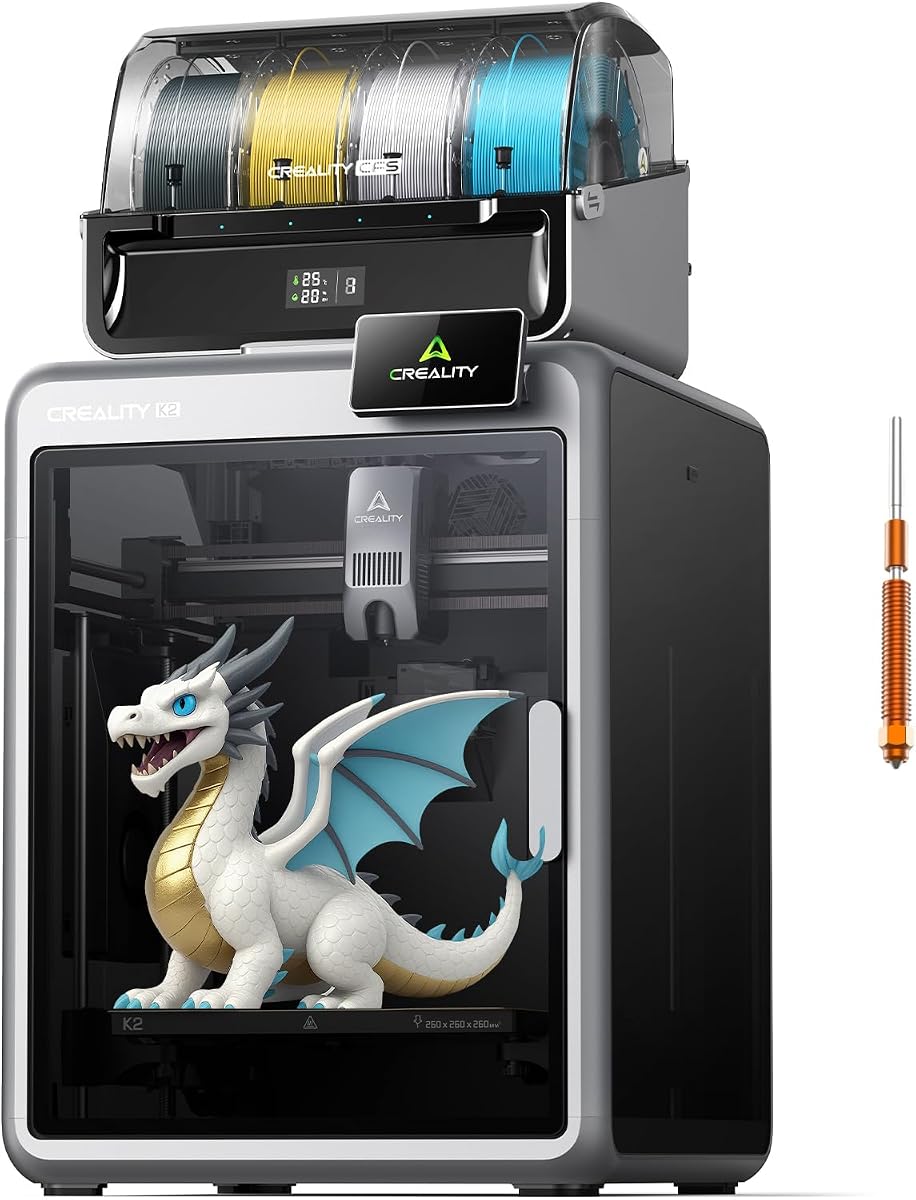
The Creality K2 Combo delivers 600mm/s printing with CFS enabling up to 16 colors. It fits the 3D Printer for Fast Printing Speed category with step-servo motors for precision and quiet mode. Pre-assembled design allows plug-and-play use right after unpacking and screen installation.
We may earn a commission when you buy through this link, at no additional cost to you.
Key strengths include smart auto leveling that only probes the print area. AI camera monitors failures and time-lapse recording. Direct drive extruder supports PLA and ABS with high consistency and dynamic torque adjustment.
Trade-offs include needing CFS for multi-color capability. The combo includes one unit but expanding costs extra. These factors are manageable for users prioritizing speed and color variety.
Ideal for users needing fast multi-color without complex setups. Recommended for small production and home workshops. It delivers precision and quiet operation for daily use.
Supports up to 16 colors via up to four units. Eliminates need for extra painting and expands creative possibilities.
Probes only the target print area for faster leveling. Ensures precise and fast bed alignment for consistent results.
We may earn a commission when you buy through this link, at no additional cost to you.
The Bambu Lab A1 offers 10000mm/s² acceleration for blazing-fast printing. As a 3D Printer for Fast Printing Speed it maintains exceptional accuracy through active flow rate compensation. Full-auto calibration handles all setup steps ensuring optimal performance with minimal user input.
We may earn a commission when you buy through this link, at no additional cost to you.
Key strengths include quiet operation with active motor noise canceling. Simplified touchscreen interface and 1-Clip nozzle swap ease maintenance. It is accessible for beginners and kids without sacrificing speed and precision.
Trade-offs include needing AMS lite for multi-color capability. Build volume is limited compared to larger models. These constraints are acceptable for entry-level users prioritizing ease of use.
Recommended for beginners needing speed and simplicity. Ideal for home and classroom use. It delivers seamless printing with minimal calibration and setup.
Handles calibration processes automatically for consistent performance. Ensures precise Z-offset and bed leveling every print.
Actively compensates flow rate for accurate extrusion. Ensures smooth and precise layers across all print speeds.
We may earn a commission when you buy through this link, at no additional cost to you.
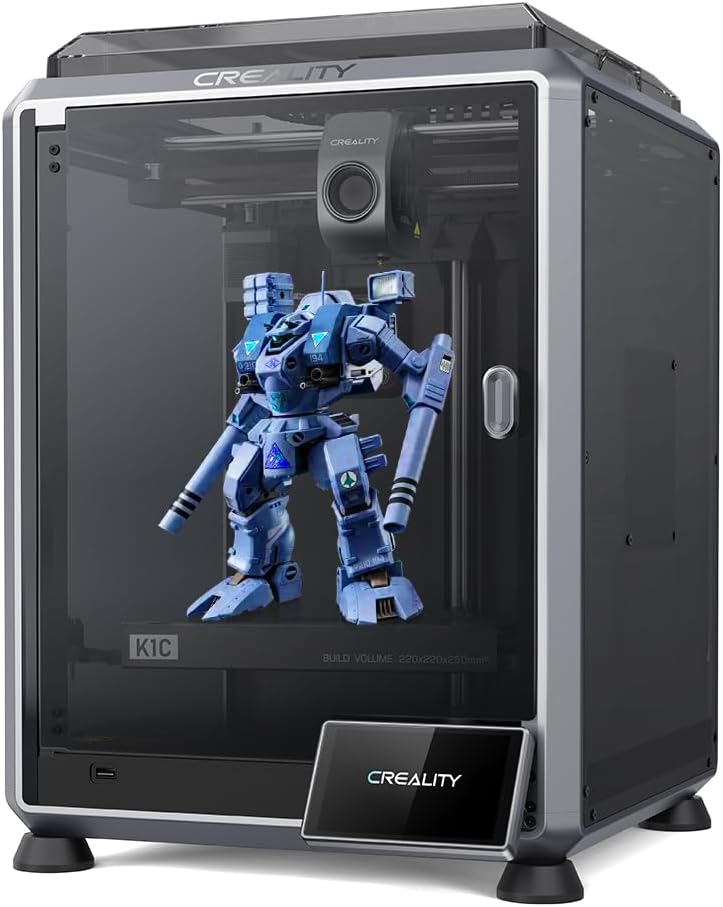
The Creality K1C delivers 600mm/s with 20000mm/s² acceleration for rapid prototyping. As a 3D Printer for Fast Printing Speed it supports carbon fiber filaments with clog-free direct extruder. Auto calibration completes in 3 minutes from unboxing to powering on for quick setup.
We may earn a commission when you buy through this link, at no additional cost to you.
Key strengths include upgraded cooling structure ensuring instant hardening of layers. AI camera monitors for failures and debris in real-time. Titanium alloy heatbreak blocks heatcreep for reliable high-temperature printing.
Trade-offs include limited build size of 8.66×8.66×9.84 inch. Requires filament purchase separately. These factors are acceptable for users needing carbon fiber capability quickly.
Ideal for engineers needing carbon fiber speed. Recommended for technical projects and prototypes. It delivers efficiency and reliability with minimal setup.
Grips filament tightly without slackening. Blocks heatcreep and supports 300C printing for reliable results.
Recognizes spaghetti failures and foreign debris. Supports real-time monitoring to avoid wasted materials and time.
We may earn a commission when you buy through this link, at no additional cost to you.
The FLASHFORGE AD5X delivers 600mm/s with multi-material and multi-color capabilities. It fits the 3D Printer for Fast Printing Speed category with vibration compensation and CoreXY structure. Intelligent Filament System enables simultaneous 4-color prints and full-auto calibration ensures consistent first layers.
We may earn a commission when you buy through this link, at no additional cost to you.
Key strengths include filament backup for uninterrupted prints. Compact modular design saves desktop space while maintaining high speed. Compatible with diverse materials like PLA-CF and TPU for broad project use.
Trade-offs include requiring IFS for color capabilities. Build volume is standard for small to medium prints. These factors are acceptable for users needing speed with color flexibility.
Recommended for creators seeking multi-material speed. Ideal for small production and prototypes. It simplifies workflow with smart calibration and backup features.
Allows simultaneous multi-color and multi-material printing. Ensures reliable results with diverse materials like PLA-CF and TPU.
Ensures uninterrupted prints with automatic backup system. Saves time and material by handling unexpected filament issues.
We may earn a commission when you buy through this link, at no additional cost to you.
The Creality K2 (A) Combo delivers 600mm/s with CFS enabling up to 16 colors. As a 3D Printer for Fast Printing Speed it uses aerospace-grade frame for stability. Automatic wire switching ensures smooth vivid color transitions for artistic and prototyping projects.
We may earn a commission when you buy through this link, at no additional cost to you.
Key strengths include built-in air purifier filtering VOCs during prints. Smart filament system handles auto identification and drying. High-flow hotend supports engineering-grade materials like PETG and ABS with ease.
Trade-offs include needing CFS for multi-color capability. Setup may need guided calibration for full features. These factors are manageable for users prioritizing color reliability.
Ideal for users needing fast reliable multi-color. Recommended for workshops and classrooms. It delivers safety and speed with smart features.
Handles auto identification and moisture-proof storage. Ensures dry and ready materials for reliable print starts.
Filters VOCs for safer workspace. Maintains safe environment during high-temperature engineering material prints.
We may earn a commission when you buy through this link, at no additional cost to you.
Selecting the right high-speed model requires balancing speed with reliability and workflow needs. This guide outlines essential factors to evaluate before investing.
Look for maximum travel speeds above 500mm/s and acceleration over 10000mm/s². High acceleration reduces print times but ensures quality if paired with vibration compensation.
Prioritize acceleration rates matching your project tolerance for speed versus detail.
Ensure the model features vibration compensation to maintain quality at top speeds. CoreXY structures and rigid frames reduce movement and improve layer alignment.
A rigid frame ensures consistent speed without quality degradation during rapid printing.
Check build volume dimensions to fit your typical projects. High-speed models range from 220mm to 270mm build sizes with varying depth.
Match build volume to your project scale to avoid unnecessary size compromises.
For color needs, verify native multi-color support or external filament systems. Some models include AMS or CFS while others require separate purchases.
Choose multi-color capability that fits your budget and project complexity.
Fast printers benefit from automated leveling to ensure consistent bed adhesion. Full-auto calibration minimizes setup time between prints.
Auto calibration ensures reliability and minimizes wasted filament due to leveling errors.
Direct drive extruders offer better flexibility for varied filaments. Verify support for engineering materials like ABS and PETG if needed.
Ensure extruder type matches your filament choices to prevent clogging.
Remote monitoring via app or web ensures oversight during long high-speed prints. Wi-Fi and LAN connectivity allow seamless control and status updates.
Connectivity features enhance workflow efficiency and safety during production.
High-speed models may generate noise but look for silent modes and balanced fans. Enclosed designs with air purifiers protect workspace safety.
Consider noise and air filtration for comfortable home or office use.
Start with proper bed leveling using auto features to ensure consistent first layer adhesion. This step prevents warping and failed prints even at high speeds.
Regularly check and clean nozzles to prevent clogging especially when switching filament types. Use recommended temperatures for materials like PLA or ABS to maintain flow.
Update firmware and calibrate motion settings periodically to maintain speed accuracy. Follow manufacturer guidance for maintenance to extend printer life.
A fast 3D printer is defined by maximum travel speed and acceleration rate. Models exceeding 500mm/s with 10000mm/s² acceleration are considered high-speed and reduce total print time significantly.
High speed can compromise quality without compensation features. Vibration compensation and rigid frames ensure consistent layers even at top speeds to maintain detail.
Not all filaments are compatible. Ensure the printer supports your material with appropriate temperature and extruder type for reliable results.
Maintain by cleaning nozzles, updating firmware, and checking belts and rails. Follow manufacturer schedules to keep speed and reliability consistent.
Typical build volumes range from 220mm to 270mm per axis. Larger models exist but speed performance depends on structural rigidity and motion system.
Yes, many high-speed models feature auto-leveling and quick setup. Beginner-friendly interfaces make them accessible for entry-level users.
Multi-color systems add time for filament swaps. Models with automatic changers minimize this overhead and maintain overall workflow speed.
Not always but enclosures help maintain temperature for engineering materials. Use enclosures if printing ABS or PETG to prevent warping.
This guide presented ten top models ranging from budget-friendly to premium options. Each delivers speed and reliability suitable for various needs and budgets.
Prioritize features like acceleration compensation and multi-color support based on your projects. Consider workflow needs and budget when selecting your ideal model.
Check current listings for prices and availability before purchasing. Ensure you match the 3D Printer for Fast Printing Speed features to your goals for best results.