
WOSPORTS Mini Trail Camera
4.2Editor score
Compact mini design
Low power consumption
850NM infrared night vision
Discover the top battery life trail camera models for 2026. Our guide compares features, power options, and performance to help you choose the best device for
Selecting the right trail camera requires careful consideration of battery longevity and performance. Whether you are hunting or monitoring wildlife, extended power ensures you never miss critical moments in the field without constant maintenance.
We evaluated ten leading models based on power efficiency, trigger speed, and durability. This comprehensive list covers non-cellular, cellular, and solar options to help you find the perfect fit for your specific outdoor monitoring requirements.
Each pick highlights key strengths and trade-offs relevant to battery consumption and operational stability. Please note that prices and availability can change frequently, so verify current details before making your final purchasing decision today.
4.2Editor score

4.3Editor score

4.2Editor score
This side-by-side comparison highlights the key specifications and power options for each of the ten selected trail cameras to help you evaluate which model offers the best battery performance for your needs.




The WOSPORTS Trail Camera stands out for its versatile power management options and sharp imaging capabilities. With a 4.3 rating, it delivers reliable 64MP photos and 4K video while offering flexibility through standard AA or rechargeable lithium batteries.
We may earn a commission when you buy through this link, at no additional cost to you.
Its 0.2S trigger speed ensures rapid capture of fast-moving wildlife without delay. The integrated 2-inch LCD allows instant previewing of footage, making it convenient to verify settings and image quality before leaving the site.
While it lacks built-in cellular features, its support for external solar panels extends monitoring duration significantly. This balance of performance and power flexibility makes it a strong contender for hunters and wildlife observers needing durable equipment.
Buyers seeking a reliable non-cellular camera with high resolution and efficient power use will appreciate this model. Its intuitive menu and password protection further enhance its value for secure outdoor surveillance and scouting.
Supports AA, lithium, and solar inputs to adapt to various field conditions and extend operational time without frequent battery swaps.
Captures 64MP photos and 4K video with a high-quality lens for sharp details day and night without sacrificing battery life excessively.
We may earn a commission when you buy through this link, at no additional cost to you.
The Moultrie Edge 3 Cellular offers remote monitoring with robust power options including rechargeable lithium packs and solar compatibility. Its 4.3 rating reflects strong performance in delivering real-time alerts and reliable connectivity across major networks.
We may earn a commission when you buy through this link, at no additional cost to you.
AI-powered buck detection reduces false alerts to conserve battery life and data usage. The app allows remote checks of battery status and feed levels, minimizing physical visits and maintaining longer deployment periods in the field.
While ongoing data plans add to the total cost, the convenience of remote monitoring and flexible power systems justifies the investment for serious landowners and hunters tracking high-value game across large properties.
This model is ideal for those prioritizing connectivity and remote management without sacrificing battery efficiency. Its built-in GPS and feeder controls add significant value for comprehensive property management and wildlife observation.
Compatible with rechargeable packs and solar panels to support extended monitoring without frequent battery replacements or visits to remote sites.
Enables users to check battery status and adjust settings from anywhere using the mobile app to save time and reduce unnecessary trips.
We may earn a commission when you buy through this link, at no additional cost to you.
The MAXDONE Solar Trail Camera delivers continuous power through its integrated solar charging and large 6000mAh rechargeable battery. Its 4.2 rating highlights strong performance in energy efficiency and clear 4K video capture for year-round monitoring.
We may earn a commission when you buy through this link, at no additional cost to you.
Users can view and download footage via a free app without subscription fees, keeping local storage secure. The 65ft low-glow night vision ensures clear images without disturbing wildlife, enhancing stealth during long deployments.
While the WiFi range is limited to 55ft, the solar charging capability significantly extends operational time. This makes it suitable for remote locations where frequent battery changes are impractical or cost-prohibitive.
Buyers looking for a maintenance-free solar solution with high resolution will find this camera appealing. Its durable IP66 design and password protection add further value for secure and reliable outdoor use.
High-efficiency solar charging paired with a 6000mAh battery provides long-lasting performance without relying on disposable cells.
Connects via WiFi hotspot to allow photo viewing and downloads without monthly fees, keeping costs low for users.
We may earn a commission when you buy through this link, at no additional cost to you.
The Meidase P70 Trail Camera combines fast trigger speeds with efficient power management suitable for hunting scenarios. Its 4.4 rating confirms reliable performance with 64MP photos and 1296p HD video across day and night conditions.
We may earn a commission when you buy through this link, at no additional cost to you.
The 0.1s trigger speed ensures quick capture of passing deer without missing critical moments. H.264 video compression keeps file sizes smaller, which reduces energy consumption per capture compared to uncompressed formats.
While it supports solar panels, they must be purchased separately. This flexibility allows users to choose cost-effective options while maintaining reliable backup power through standard AA batteries for uninterrupted monitoring.
This camera is well-suited for those who prioritize fast detection and efficient video storage. Its user-friendly controls and waterproof design make it accessible for beginners needing effective power performance.
H.264 technology reduces file sizes to save storage space and minimize power drain during recording.
Designed to pair with optional solar panels for continuous power, ensuring long-term use without frequent battery changes.
We may earn a commission when you buy through this link, at no additional cost to you.
The WOSPORTS Mini Trail Camera is designed for efficient power use in a compact form factor. With a 4.2 rating, it offers 30MP photos and 1080P HD video using only four AA batteries to maintain a low-power footprint.
We may earn a commission when you buy through this link, at no additional cost to you.
Its small size makes it easy to conceal in dense foliage or on smaller branches where larger cameras may not fit. The simple setup process allows quick deployment for temporary monitoring or scouting activities.
While the resolution is lower than premium models, this trade-off contributes to better battery longevity for the battery capacity. This balance is ideal for users who need extended standby time with minimal power draw.
Buyers seeking an affordable entry-level camera with reasonable efficiency will find this model suitable. Its waterproof design and clear night vision add practical value for casual observation tasks.
Uses only four AA batteries and optimized electronics to extend standby time for longer deployments between changes.
Small footprint and camouflage finish help the camera blend into surroundings for natural wildlife behavior capture.
We may earn a commission when you buy through this link, at no additional cost to you.
The GardePro E5S offers robust non-cellular performance with high-resolution imaging and rapid trigger speeds. Its 4.4 rating reflects strong reliability using eight AA batteries and optional solar support for extended monitoring periods.
We may earn a commission when you buy through this link, at no additional cost to you.
Three PIR sensors enable lightning-fast detection of moving wildlife, ensuring crisp captures without blur. The rugged IP66 design withstands harsh weather conditions, maintaining stable battery performance even in cold or wet environments.
While it requires SD card retrieval for viewing, this non-cellular approach keeps power usage minimal and operational costs low. Users benefit from consistent capture rates without the drain associated with constant data transmission.
This model is ideal for traditional hunters who prefer reliable, self-contained monitoring without ongoing data plans. Its durable construction and fast response make it a strong choice for long-term outdoor placements.
Triple PIR sensors ensure rapid motion detection to reduce missed shots while maintaining efficient power usage.
IP66 rating protects internal components and battery connections from moisture and dust for consistent operation.
We may earn a commission when you buy through this link, at no additional cost to you.
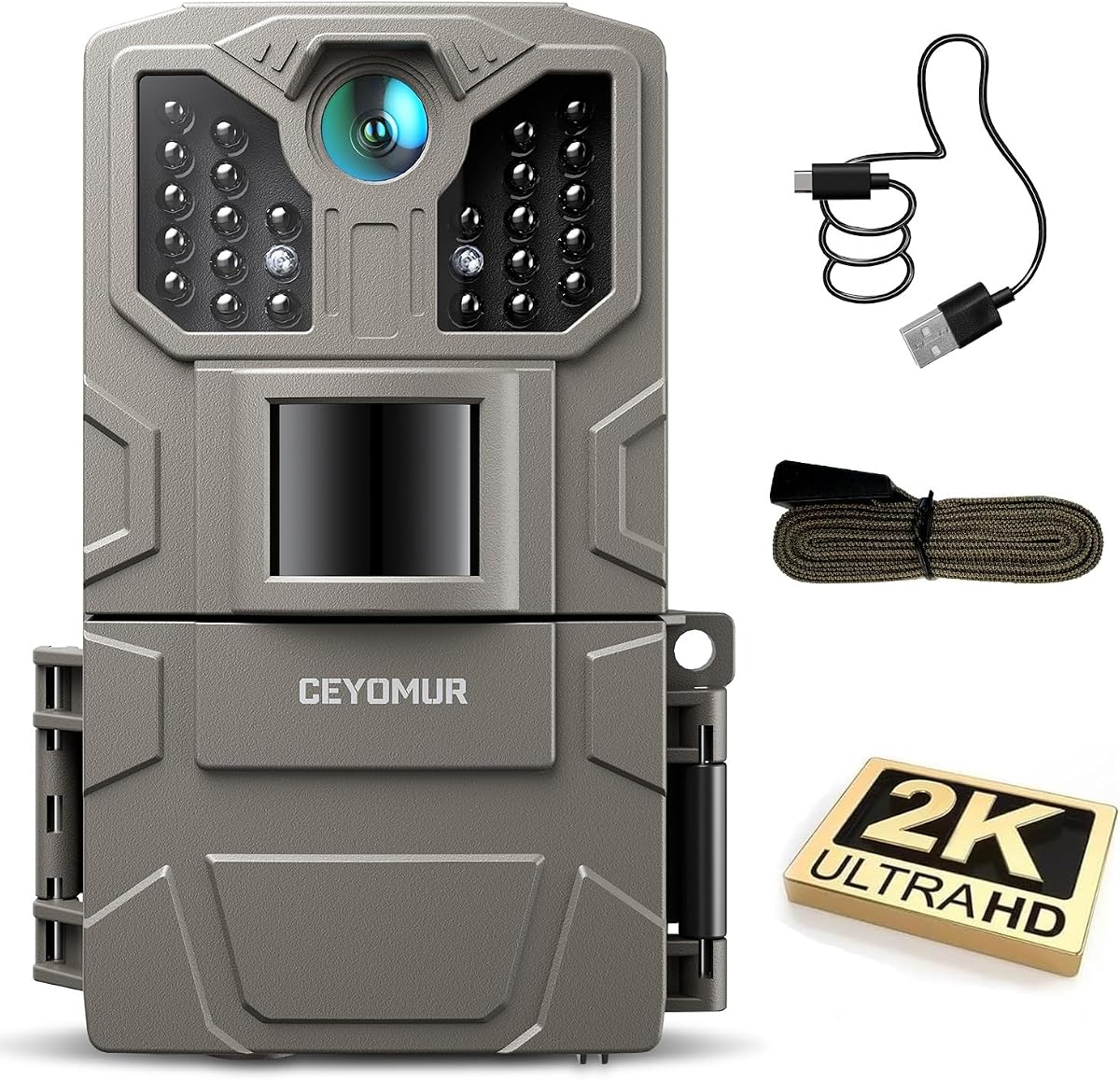
The CEYOMUR Trail Camera is designed for simplicity and ease of use for first-time buyers. Its 4.0 rating highlights solid performance with 36MP photos and 2K video, powered by standard AA batteries for straightforward deployment.
We may earn a commission when you buy through this link, at no additional cost to you.
The integrated side design consolidates controls and the screen, simplifying setup without repositioning the camera. This ergonomic approach reduces time spent configuring settings in the field and minimizes battery drain during adjustments.
While feature-rich models offer more options, this camera focuses on core functionality to ensure reliable operation. Its 850nm night vision provides clear images without excessive power consumption, suitable for budget-conscious users.
Buyers new to trail cameras will appreciate its intuitive operation and durable construction. It serves as a practical tool for monitoring without the complexity of advanced settings or high-end specifications.
Integrated one-side layout simplifies adjustment and previewing to save battery power and setup time in the field.
User-friendly controls and clear menus make it accessible for beginners needing reliable performance without technical experience.
We may earn a commission when you buy through this link, at no additional cost to you.
The WOSPORTS Mini 2 Pack provides an affordable solution for monitoring multiple areas with efficient power use. With a 4.2 rating, each unit offers 30MP photos and 1080P video using four AA batteries to minimize energy consumption.
We may earn a commission when you buy through this link, at no additional cost to you.
Inclusion of 16GB SD cards simplifies setup and reduces accessory costs for the buyer. The low-power design ensures reasonable battery life for the size, making it practical for short-term tracking or backyard surveillance.
While individual battery life is shorter due to small battery capacity, the dual-camera kit allows broader coverage. This is ideal for comparing activity across different locations without needing expensive high-end models.
This kit suits users seeking cost-effective wildlife monitoring with minimal complexity. Its lightweight build and straightforward installation make it accessible for families or small property owners.
Two cameras with included SD cards allow wide coverage and setup savings for basic monitoring tasks.
Small battery requirement supports longer life per unit compared to larger models with higher power draw.
We may earn a commission when you buy through this link, at no additional cost to you.
The WOSODA Mini 4 Pack offers exceptional value for comprehensive coverage with four compact units. With a 4.3 rating, each camera delivers 30MP photos and 1080P video while maintaining low power consumption through four AA batteries.
We may earn a commission when you buy through this link, at no additional cost to you.
Inclusion of batteries and SD cards in the package makes it ready for immediate deployment. This comprehensive bundle reduces the need for additional purchases, ensuring quick setup across multiple hunting or security zones.
While individual capacity is small, the low-power design extends standby time effectively. This makes the set ideal for seasonal monitoring where frequent checks are possible without investing in high-end power systems.
Buyers needing extensive area coverage at an affordable price will find this pack practical. Its fast trigger and stealth design ensure reliable capture without drawing attention to the monitored areas.
Includes batteries and SD cards to allow immediate setup without extra accessory costs or delays.
Compact camouflage design helps hide cameras effectively to reduce detection by wildlife and maintain natural behavior.
We may earn a commission when you buy through this link, at no additional cost to you.
The GardePro E5S 2-Pack provides dual high-performance units with efficient power management options. With a 4.4 rating, each camera offers 64MP photos and 1296P video, using eight AA batteries or optional solar panels for extended monitoring.
We may earn a commission when you buy through this link, at no additional cost to you.
The fast 0.1s trigger ensures rapid wildlife capture without delay. Its rugged IP66 design maintains consistent battery performance in various weather conditions, reducing the risk of failure during critical observation periods.
While using eight batteries per unit increases initial power cost, the high image quality justifies the trade-off. This setup is best for serious scouts needing detailed visual data from multiple secure locations.
Buyers seeking reliable high-resolution performance will find this kit valuable. Its durable construction and quick response make it suitable for long-term placements where image clarity matters more than battery simplicity.
Delivers 64MP photos with eight batteries or solar support for detailed monitoring without sacrificing image clarity.
IP66 weatherproofing protects internal electronics and battery connections to ensure consistent performance in harsh conditions.
We may earn a commission when you buy through this link, at no additional cost to you.
Selecting a trail camera with optimal battery life requires understanding power technologies and usage patterns. This guide breaks down essential factors to help you choose a device that maximizes runtime without sacrificing performance.
Trail cameras typically run on AA batteries, rechargeable lithium packs, or solar charging systems. AA batteries are the most common but require periodic replacement. Lithium packs offer longer life but higher upfront costs, while solar panels provide continuous power for remote setups.
Choose a power source based on how frequently you can access the site. Solar options are ideal for long-term use without visits.
Larger capacity batteries or more cells provide extended operation but increase weight and size. Compact models may use fewer cells to save space but will need frequent changes. Check the manufacturer's estimated runtime under typical usage conditions to match your needs.
Prioritize higher capacity or rechargeable options if you cannot visit the camera often.
Fast trigger speeds ensure you capture wildlife before they move out of frame but can drain batteries if set too sensitive. High sensitivity increases false triggers from vegetation, consuming power unnecessarily. Adjust PIR settings to balance detection range and power conservation.
Use moderate sensitivity settings to reduce unnecessary captures and extend battery life in windy areas.
Higher resolutions like 4K or 64MP require more energy to process and store images. Lower resolutions save battery but may reduce detail. Consider your primary goal whether tracking or identification to select the right resolution that balances quality and power consumption.
Select lower resolution if long battery life is your priority over image clarity.
Built-in LCD screens and cellular or WiFi connectivity consume significant power. Cameras without these features typically last longer. If remote access is not critical, a non-connected model will provide better battery efficiency for simple monitoring tasks.
Avoid cellular models unless real-time data is necessary to prevent rapid battery depletion.
Infrared night vision uses LEDs that consume power depending on range. 940nm LEDs are invisible to animals but may be dimmer than 850nm. Ensure the night vision range matches your typical distance needs without overusing energy for unnecessary illumination.
Choose no-glow LEDs for stealth and better battery conservation in night environments.
Cameras with compression like H.264 save space and power by reducing file sizes. Larger storage cards allow more images but require more energy to manage. Proper storage settings prevent overflow and maintain consistent performance over time.
Use compression settings to save energy and storage space simultaneously.
A weatherproof enclosure protects internal components and battery contacts from moisture and heat. Poor sealing can lead to corrosion and faster battery drain. Look for IP66 or higher ratings to ensure the device survives harsh outdoor conditions without energy loss.
Check sealing quality to maintain battery integrity in extreme temperatures and humidity.
Install fresh alkaline or lithium batteries securely to ensure consistent power flow. Align the polarity correctly and tighten the compartment to prevent vibration from loosening contacts during windy conditions. This simple step prevents unexpected shutdowns in the field.
Adjust the PIR sensitivity and detection range based on local wildlife movement patterns. Too high a setting triggers false alarms from branches, draining batteries unnecessarily. Fine-tune the zones to focus on active animal paths for better energy efficiency.
Regularly check the camera housing for dirt or moisture that could affect the battery compartment. Clean the screen and lens with a soft cloth to maintain image clarity. Store spare batteries in a dry place to preserve their charge until needed for future use.
To extend battery life, reduce the video recording duration, lower image resolution, and avoid unnecessary cellular connectivity. Adjusting motion sensitivity settings to prevent false triggers is also essential. Using rechargeable lithium batteries or a solar panel can significantly increase operational time.
Most trail cameras operate in cold temperatures but battery performance can decrease in freezing conditions. Lithium batteries generally perform better in cold than alkaline ones. Ensure the camera housing is sealed tightly to keep internal components protected from moisture.
The 940nm LEDs emit invisible light that does not disturb wildlife but may be dimmer. The 850nm LEDs have a slight red glow that can be seen by animals but offer brighter night images. Choose 940nm for stealth and better battery efficiency.
Solar panels are highly beneficial for remote locations where frequent battery changes are difficult. They provide continuous power during daylight to offset energy use at night. If you need long-term monitoring without visits, a compatible solar panel is a smart investment.
Use sturdy mounting straps to secure the camera to trees or posts out of reach. Position the camera high up or behind cover to avoid accidental discovery. Regularly checking the site and using password protection on settings can deter tampering by people.
This usually happens because the PIR sensor sensitivity is too high or the camera is placed in an area with moving vegetation. Adjusting the sensitivity settings or selecting a stationary detection zone can reduce false triggers. Proper placement away from swaying branches is key.
Yes, cameras with WiFi or Bluetooth allow direct connection to your phone via a hotspot. This avoids the need for a cellular plan but requires you to be near the camera. It saves battery life while still offering convenient access to your captured images.
High-speed SD cards labeled Class 10 or UHS-I ensure smooth recording and quick data transfer. A card with sufficient capacity like 32GB to 512GB prevents frequent full storage issues. Ensure the card is formatted correctly in the camera to maintain reliability.
Choosing the right trail camera depends on balancing power efficiency with the specific needs of your monitoring projects. The models reviewed offer diverse options from solar solutions to compact low-power units suitable for different budgets and environments.
Prioritize features like rechargeable support or fast triggers based on how often you can access the site. Understanding your power requirements ensures you select a device that keeps running without constant maintenance or battery swaps.
Remember that prices and availability can shift so check the latest details before purchasing. Use this guide to find a reliable tool that supports your wildlife observation or security goals effectively.