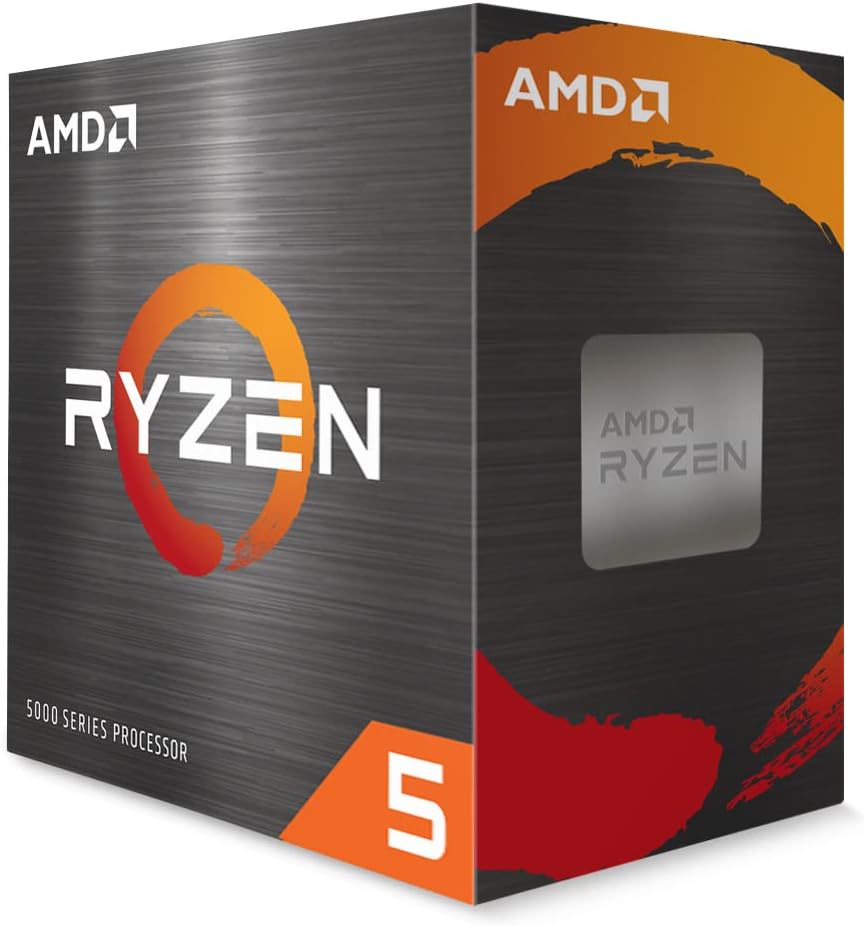
AMD Ryzen 5 5500
4.7Editor score
Affordable six-core performance
Includes Wraith Stealth cooler
Supports DDR4 memory
This guide compares the top CPUs for Excel and data analysis to help you find the right processor for spreadsheets and heavy workloads.
Choosing the right CPU for Excel and data analysis is crucial for professionals who rely on spreadsheets for critical business decisions and daily operations.
We compared the latest processors based on core counts, clock speeds, and efficiency to identify models that handle complex formulas and large datasets effectively.
Each pick below highlights specific strengths and weaknesses so you can match your budget and performance needs while keeping in mind that prices change often.
4.7Editor score

4.8Editor score

4.8Editor score
The table below provides a side-by-side look at the key specifications and features of every processor included in this comprehensive comparison guide.


The Intel Core Ultra 9 285K stands out as a top-tier processor with a 4.6 rating from users who need serious computing power for data tasks.
We may earn a commission when you buy through this link, at no additional cost to you.
It features 24 cores and 24 threads which allows for smooth multitasking when running complex spreadsheets alongside other analytical software tools.
While it offers incredible speed up to 5.7 GHz and 40MB cache, buyers should note that a cooler is not included in the box purchase.
This processor is ideal for professionals who demand the highest performance for heavy data analysis and can invest in a robust cooling solution.
The performance hybrid architecture prioritizes workloads to optimize performance and efficiency so your PC runs cooler and quicker.
Compatible with Intel 800 series chipset-based motherboards and supports PCIe 5.0 and 4.0 for future-ready connectivity.
We may earn a commission when you buy through this link, at no additional cost to you.
The AMD Ryzen 7 9800X3D earns a 4.8 rating for its impressive cache and efficiency which benefits data processing and large dataset handling tasks.
We may earn a commission when you buy through this link, at no additional cost to you.
Built on Zen 5 technology it delivers a 16 percent IPC uplift and great power efficiency to keep systems running smoothly under heavy loads.
With 96MB L3 cache users will experience faster data retrieval which is essential for complex Excel formulas and quick calculation times.
This processor is best suited for users who prioritize single-threaded performance and cache speed over having a high number of cores.
The 96MB L3 cache allows higher clock speeds and better thermal performance compared to previous generations for improved responsiveness.
Next Gen 3D V-Cache and Zen 5 technology provide a significant leap in performance for demanding desktop applications.
We may earn a commission when you buy through this link, at no additional cost to you.
The Intel Core i9-14900K holds a 4.2 rating and offers leading max clock speeds up to 6.0 GHz for rapid responsiveness in data entry and queries.
We may earn a commission when you buy through this link, at no additional cost to you.
It features 24 cores and 32 threads alongside integrated UHD Graphics 770 which provides flexibility for systems without dedicated graphics cards.
Compatible with 600 series and 700 series chipsets this processor supports both DDR4 and DDR5 platforms to cut load times for heavy datasets.
It is a strong choice for users who want the fastest single-core performance available on the Intel platform for quick Excel operations.
Leading max clock speed of up to 6.0 GHz gives you smoother play and rapid responsiveness for heavy workloads.
Supports both DDR4 and DDR5 platforms so you can choose your memory path based on budget and performance needs.
We may earn a commission when you buy through this link, at no additional cost to you.
The AMD Ryzen 5 9600X receives a 4.8 rating for its high boost clock of 5.4 GHz and efficient Zen 5 architecture which aids single-threaded Excel tasks.
We may earn a commission when you buy through this link, at no additional cost to you.
With 6 cores and 12 threads this processor is unlocked for overclocking and supports DDR5-5600 memory for faster data access speeds.
Designed for the Socket AM5 platform it supports PCIe 5.0 on select motherboards ensuring you are ready for next-generation storage and peripherals.
This model is ideal for users who want a fast and efficient CPU for spreadsheet work without paying for extra cores they might not need.
5.4 GHz Max Boost unlocked for overclocking provides top-tier responsiveness for applications that rely on single core speed.
For the state-of-the-art Socket AM5 platform it can support PCIe 5.0 on select motherboards for high speed connectivity.
We may earn a commission when you buy through this link, at no additional cost to you.
The Intel Core Ultra 7 270K has a 4.7 rating and features 24 cores with up to 5.5 GHz turbo frequency for top-tier responsiveness in data work.
We may earn a commission when you buy through this link, at no additional cost to you.
It offers next-gen platform support with PCIe 5.0 and high-speed DDR5 memory up to 7200 MT/s for faster data movement within large spreadsheets.
Robust power and thermal design with 125W base power and 250W max turbo power allow it to sustain high-intensity tasks for longer periods.
This processor is built for enthusiasts and power users who want to tune performance when paired with Intel Z-series chipsets for best results.
Enabling PCIe 5.0 and high-speed DDR5 memory up to 7200 MT/s ensures your system keeps up with rapid data demands.
Engineered with 125W base power and 250W max turbo power to sustain high-intensity workloads without throttling.
We may earn a commission when you buy through this link, at no additional cost to you.
The AMD Ryzen 9 9950X earns a 4.8 rating and delivers 16 cores and 32 threads for ultra-fast performance when handling multiple datasets simultaneously.
We may earn a commission when you buy through this link, at no additional cost to you.
With a 5.7 GHz Max Boost and 80 MB cache this processor is optimized for creator and gaming workloads that require high throughput speed.
It is based on the Zen 5 architecture and supports DDR5-5600 on the state-of-the-art Socket AM5 platform for modern high-speed data access.
This model is perfect for professionals who need to run heavy analysis tools and simulations without waiting for processing to complete.
16 Cores and 32 processing threads allow you to run many applications at once without slowing down your main tasks.
5.7 GHz Max Boost unlocked for overclocking ensures quick response times for single thread heavy spreadsheet calculations.
We may earn a commission when you buy through this link, at no additional cost to you.
The Intel Core i7-12700KF holds a 4.7 rating and offers more cache space and hyper-threading for high performance in computation-intensive spreadsheet applications.
We may earn a commission when you buy through this link, at no additional cost to you.
It features 12 cores including 8 P cores and 4 E cores with up to 5.0 GHz speed and 25 MB L3 cache for smooth multitasking.
The Intel 7 Architecture enables improved performance per watt and micro architecture makes it power-efficient for long data sessions.
This processor is a reliable choice for users who want a balance of performance and cost for moderate Excel and data tasks.
11 MB L2 and 25 MB L3 cache offers supreme performance for computation intensive apps like large data sets.
Intel 7 Architecture enables improved performance per watt and micro architecture makes it power-efficient for all day use.
We may earn a commission when you buy through this link, at no additional cost to you.
The Intel Core i5-14400F receives a 4.8 rating and provides 10 cores with hybrid architecture to prioritize and distribute workloads for optimal Excel performance.
We may earn a commission when you buy through this link, at no additional cost to you.
With up to 4.7 GHz speed and 20MB Cache this processor supports both DDR4 and DDR5 memory for flexibility in system building.
It is compatible with Intel 600 series and 700 series chipsets and includes a RM1 thermal solution for easy installation out of the box.
This model is recommended for users who want reliable performance for daily data work without needing the highest end hardware specs.
Performance hybrid architecture integrates two core microarchitectures prioritizing workloads to optimize performance for your tasks.
Supports DDR4 and DDR5 Memory so you can choose the best RAM option for your budget and speed needs.
We may earn a commission when you buy through this link, at no additional cost to you.
The AMD Ryzen 9 9900X holds a 4.8 rating and delivers 12 cores and 24 threads for ultra-fast performance when handling complex data workflows.
We may earn a commission when you buy through this link, at no additional cost to you.
With a 5.6 GHz Max Boost and 76 MB cache this processor is unlocked for overclocking and supports DDR5-5600 memory for speed.
It is designed for the Socket AM5 platform and can support PCIe 5.0 on select motherboards for future-proofing your data workstation.
This CPU is ideal for users who need more cores than a standard mid-range part but do not need the full power of a 16 core chip.
12 Cores and 24 processing threads allow you to manage multiple heavy tasks without impacting your spreadsheet speed.
5.6 GHz Max Boost unlocked for overclocking provides fast single thread performance for complex formula calculations.
We may earn a commission when you buy through this link, at no additional cost to you.
The AMD Ryzen 5 5500 has a 4.7 rating and bundles a Wraith Stealth cooler making it an easy and affordable choice for spreadsheet work.
We may earn a commission when you buy through this link, at no additional cost to you.
With 6 cores and 12 threads this processor offers up to 4.2 GHz speed and 19 MB cache for solid performance in daily data tasks.
It supports DDR4-3200 memory and is designed for the advanced Socket AM4 platform which is widely available at lower cost.
This model is perfect for users who want a budget-friendly CPU for standard Excel use and want to save on initial system costs.
Bundled with the AMD Wraith Stealth cooler so you have everything you need to get started immediately without extra cost.
For the advanced Socket AM4 platform this CPU offers solid performance at a price point accessible for many budgets.
We may earn a commission when you buy through this link, at no additional cost to you.
Selecting the right CPU depends on your specific needs for calculations data volume and multitasking requirements.
Core count determines how many tasks the processor can handle at once and is vital if you run multiple spreadsheets or apps.
Choose more cores for heavy multitasking and fewer for basic tasks to balance cost and performance.
Clock speed affects how quickly the CPU can execute single-threaded tasks like complex formulas and lookups in Excel.
Higher speeds are beneficial for rapid response times in daily data entry and analysis work.
Cache memory stores frequently used data to reduce the time it takes to access information during calculations.
More cache means faster data retrieval and smoother performance when working with large datasets.
The processor architecture defines efficiency and power use which impacts cooling needs and long-term stability.
Newer architectures offer better performance per watt and should be prioritized for modern systems.
Socket type determines motherboard compatibility and future upgrade paths for your system hardware.
Ensure the socket matches your current or planned motherboard to avoid unnecessary replacement costs.
Some high-performance processors require dedicated cooling solutions which can increase your total build budget.
Check if a cooler is included or plan for aftermarket cooling if your workload involves sustained high loads.
Memory support dictates which RAM types you can use and affects overall data transfer speeds.
Opt for DDR5 support if you want future proofing and faster throughput for heavy data analysis.
Integrated graphics allow you to boot a system without a dedicated GPU which saves money for basic setups.
Choose a model with graphics if you do not have a separate card and want simplicity.
Install the CPU carefully by aligning the notches and using even pressure to avoid bending pins or damaging the chip.
Apply thermal paste correctly between the CPU and cooler to ensure efficient heat transfer during operation.
Keep your system well ventilated and clean dust from fans regularly to maintain optimal cooling and performance.
More cores help when running multiple applications but Excel often relies on single core speed. Balance is key.
Larger cache improves speed for large datasets. Aim for higher MB counts if working with big files often.
No basic tasks run well on mid-range CPUs. Save money unless you process huge datasets regularly.
Higher clock speed means faster calculations. This is vital for complex formulas that take long to compute.
DDR5 offers faster speeds and better future proofing. DDR4 is sufficient for most current basic data needs.
Most include basic coolers. High-end models often do not. Check product details before purchase.
Follow manufacturer instructions. Some motherboards need updates before new chips work. Check support pages.
Both have strengths. Intel offers high clock speeds. AMD provides strong cache. Choose based on needs.
We have reviewed ten top CPUs that cater to various needs from budget beginners to power users with heavy data demands.
Prioritize core count and clock speed based on your typical workload to ensure smooth performance and efficient operation.
Always check current pricing and availability before buying as these factors can change frequently in the market.